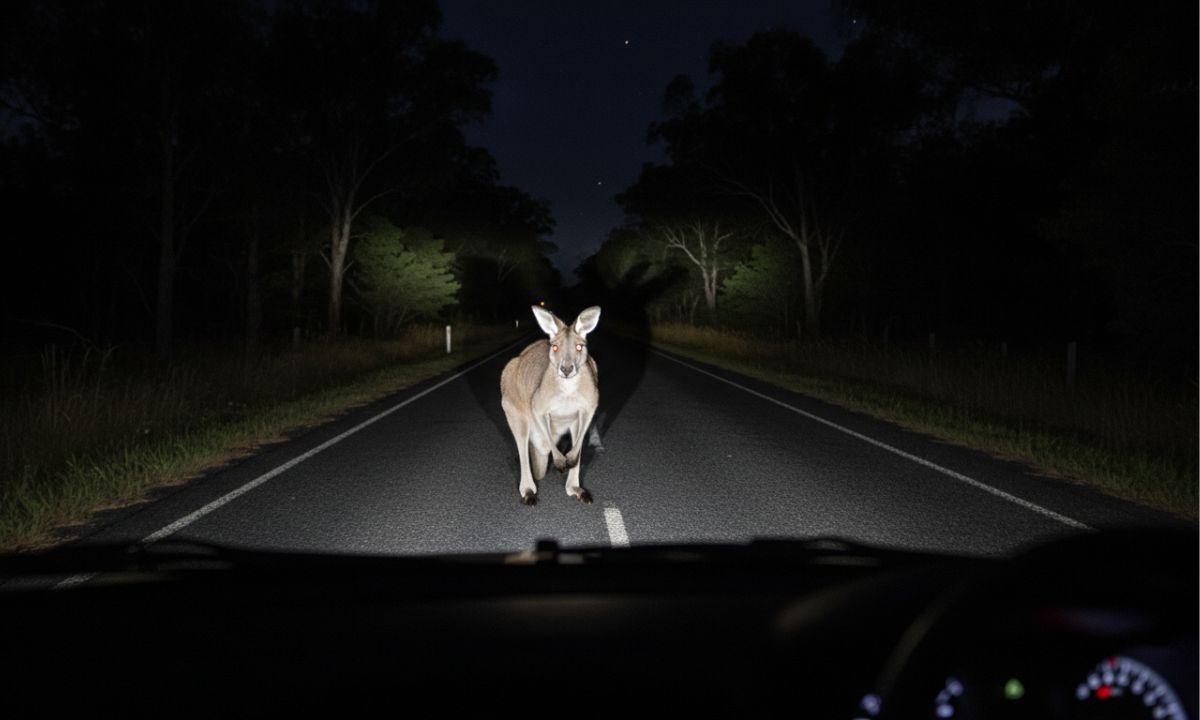
On Queensland’s roads, the scariest thing you might meet after dark isn’t another driver, it’s a kangaroo in your headlights. Across Australia last year, there were 23,840 wildlife‑related crashes, with about 18% of those vehicles written off and average repair bills of around $8,000.
Here's what you need to know about driving safely through Queensland's animal collision season and why the instincts you rely on might actually put you in greater danger.
When Wildlife Becomes a Road Hazard
The Riskiest Times to Drive
Dusk emerges as the single most dangerous time for animal collisions across Queensland. As visibility drops and animals become more active, this time of day creates perfect conditions for unexpected encounters. Then, after dusk, dawn becomes the second most dangerous time to drive.
Friday stands out as the worst day of the week, most likely because of its increased weekend travel, accumulated fatigue from the working week and heavier traffic volumes. Collisions on this day outnumber all other days.
Why Animals Are on the Move
Environmental pressures seem to be driving more and more animals onto the road. Leanne Taylor, CEO of Wildlife Information, Rescue and Education Service (WIRES), explains: "Extreme weather events over the past 12 months continue to impact our native animals especially in regional Australia with many regions affected by ongoing drought, severe floods and bushfires."
When animals are forced from their usual habitat, they cross roads and highways searching for food, water and shelter. Add ongoing habitat loss through development and land clearing, and species including kangaroos, wallabies, wombats and koalas face displacement and vulnerability.
Queensland's Collision Hotspots
Four Queensland locations stand out in recent analysis: Brisbane, Goondiwindi, Townsville and Charters Towers. These regional centres share common characteristics; they're surrounded by wildlife corridors, experience significant through-traffic and sit at the intersection of habitat and highway.
Brisbane's northern suburbs and Ipswich both saw 40% increases in animal collisions, reflecting how urban development pushes wildlife into proximity with growing traffic volumes.
Before You Start the Engine
Smart preparation begins before you leave the driveway.
Plan Around Peak Risk
Check your departure time against known risk periods. If your shift ends at 6 pm and your commute takes you through Nebo or Warwick, you're driving straight into the highest-risk window. When possible, delaying departure, even by 30 minutes, can reduce your chances of a collision.
For caravanners planning routes, consider your arrival times at regional centres. Pushing to reach Charters Towers by dusk might save daylight, but it trades one risk for another.
Know Your Route
Queensland's collision hotspots reflect consistent wildlife movement patterns along established corridors. Understanding which sections of your regular route pass through higher-risk areas lets you adjust your alertness and speed accordingly.
Regional drivers often develop familiarity with their routes, which can be both an advantage and a risk. You know where animals typically appear, but familiarity can breed complacency.
Factor in Fatigue
Night-shift workers face compounded challenges. You're driving during peak animal activity periods while managing the fatigue that comes with working against your circadian rhythm. Friday's position as the worst day suggests cumulative fatigue plays a role in collisions with animals.
If you're tired, you're slower to spot movement in your peripheral vision and slower to react when an animal appears.
Active Driving Strategies That Work
Once you're on the road, specific techniques will reduce your collision risk.
The Swerving Problem
The best advice out there is not to swerve when you spot an animal, but your instinct says otherwise.
An animal appears in your headlights, and every impulse tells you to steer around it. But data reveal that those who swerve create more dangerous outcomes than the initial animal encounter.
Swerving increases your risk of colliding with another vehicle or a roadside obstacle. On regional roads, particularly at 100km/h, swerving can cause crashes into trees, posts or embankments. These collisions cause serious injuries and fatalities at rates that far exceed animal strikes.
The recommended response is to brake firmly and hold your lane, but this contradicts your instincts.
For caravan drivers, this principle becomes even more crucial. Your braking distance extends significantly, and your vehicle's response to sudden steering will change. A swerve that might be manageable in a sedan can become deadly when towing.
Speed Matters More Than You Think
Lower speeds provide more reaction time and reduce collision severity. At 100km/h, you cover nearly 28 metres every second. At 80km/h, you cover 22 metres. That six-metre difference might be exactly what you need to stop rather than strike. In identified hotspots, reducing speed creates a time buffer that lets your controlled braking technique work.
Use Your Vision Strategically
High beams are your primary tool on rural roads. They extend your sight distance and create eye-shine from animals along the roadside. Kangaroos are the most commonly struck animal, and they're most active at dawn and dusk when your vision is naturally compromised.
Don't fixate on the road directly ahead, as your peripheral vision picks up movement that your central vision misses. Animals on the shoulder often signal others about to cross.
Watch for animals in groups. Where you see one kangaroo, others will likely follow. The animal you spot might cross safely, but the one behind it might not wait for your vehicle to pass.

Maintain Defensive Position
Stay centred in your lane rather than drifting toward either edge. This positioning gives you maximum reaction space regardless of which side an animal approaches from.
Keep a substantial distance from vehicles ahead. If the car in front strikes an animal or brakes suddenly, you need space to respond. Tailgating completely removes this buffer.
For regular commuters, resist the temptation to speed up through known animal crossing areas. The fact that you've driven a section successfully hundreds of times doesn't mean this is always the case.
Also read: Deadly Paradox: 55% of Queensland Road Deaths Occur on Country Roads
If a Collision Happens
Even careful drivers occasionally hit animals, so your immediate response matters for both safety and legal reasons.
Turn on hazard lights immediately. If you can safely pull over, do so, but don't stop in the travel lane or create additional hazards for other vehicles.
Check your passengers first. Vehicle damage can be repaired, but injuries need immediate attention.
If the animal is injured and you can approach safely, contact WIRES, who receive thousands of car strike-related calls annually through their 24/7 rescue service. Don't approach large animals like kangaroos if they're still mobile, as injured animals can injure people attempting to help.
Document the scene with photos, noting the location, time and conditions. This information supports your insurance claim and helps authorities track collision patterns.
Inspect your vehicle before continuing. With 18% of vehicles nationally written off after wildlife collisions, damage isn't unusual. Radiator damage, broken light or suspension problems might make the vehicle unsafe to drive.
The Bigger Picture
Queensland's wildlife collisions last year are environmental indicators showing how habitat pressure, development and climate impacts are forcing wildlife into proximity with human infrastructure.
For drivers, this means the problem isn't temporary or isolated. The risk extends to every driver who travels at dawn or dusk through areas where wildlife and highways intersect.
Your response to that risk divides into two categories: what you can control and what you can't. You can't change animal behaviour or redesign regional road networks. But you can adjust your departure time by 30 minutes. You can reduce speed in known hotspots. You can resist the instinct to swerve. And you can remember that controlled braking in your lane protects you better than any evasive manoeuvre.
For night-shift workers completing another long week and for daily commuters driving through peri-urban growth areas, these strategies are practical responses to documented patterns.
The kangaroo that appears in your headlights doesn't understand collision statistics. But you do, and that knowledge, applied consistently, makes the difference between a close call and an $8,000 repair bill, or something far worse.