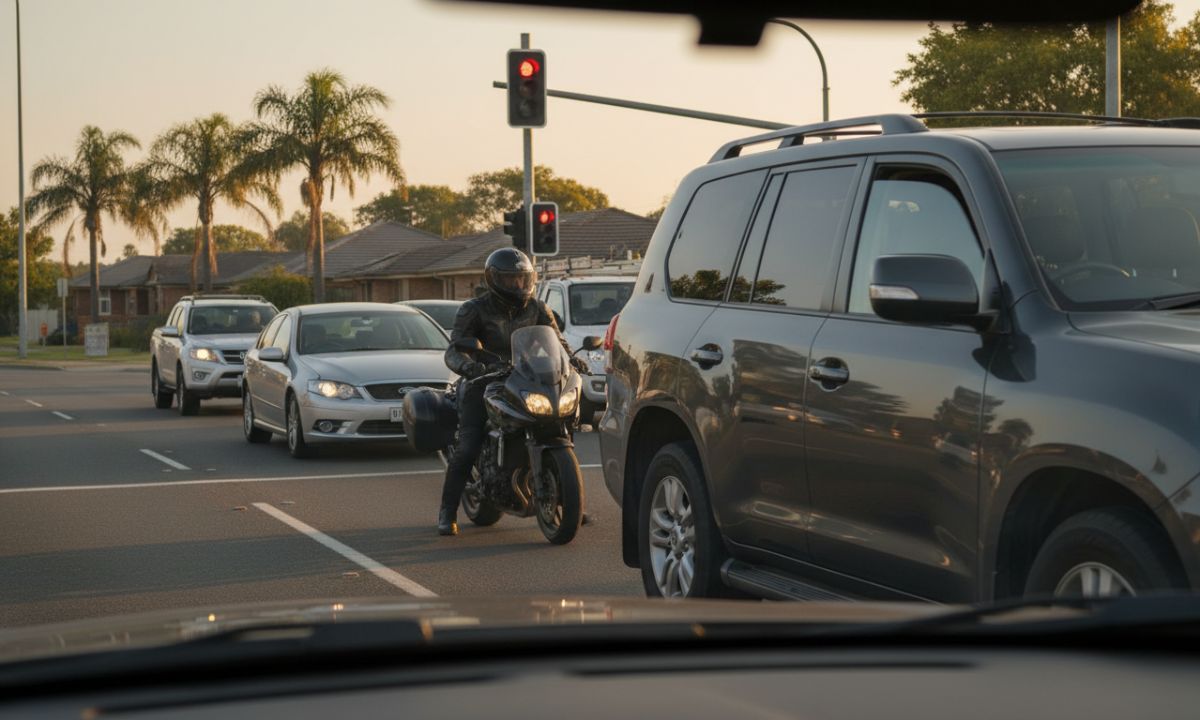
Motorcycles make up around 5% of registered vehicles in Queensland, yet their riders account for approximately 27% of the state's road deaths. Australia-wide, that was 21% of all road fatalities in 2024, with 278 riders tragically losing their lives.
This isn't about discouraging people from riding motorcycles, as it represents freedom, community and passion for thousands of Australians. But it’s important to talk honestly about why the gap between motorcycle representation and motorcycle deaths is so wide, and what evidence-based solutions there are that can begin to close it.
At the heart of this issue is infrastructure designed for cars, gaps in road safety training and a system that hasn't fully adapted to protect vulnerable road users.
Understanding these factors is the first step toward meaningful change.
Queensland's Crisis Deepens
The statistics for 2025 highlight the urgency of this situation. By late November, Queensland had recorded 282 total road fatalities, with the proportion involving motorcycles worryingly high.
The historical trend is equally concerning. Queensland recorded 43 motorcyclist fatalities in 2019, and that number climbed to 77 deaths by late 2023, representing a 79% increase in just four years.
Across Australia, the picture mirrors Queensland's trajectory. Between 2017 and 2024, annual motorcyclist fatalities increased by 32%. During that same period, total road fatalities increased only 6%, which means it’s something about motorcycling specifically that’s the problem.
Where Accidents Keep Happening
Approximately two-thirds of motorcycle fatalities take place in regional and remote areas, where higher speeds and longer response times make crashes even more deadly. On the other hand, around two-thirds of hospitalisations stemming from crashes occur in major cities, where lower-speed collisions happen more frequently but there’s better access to medical attention.
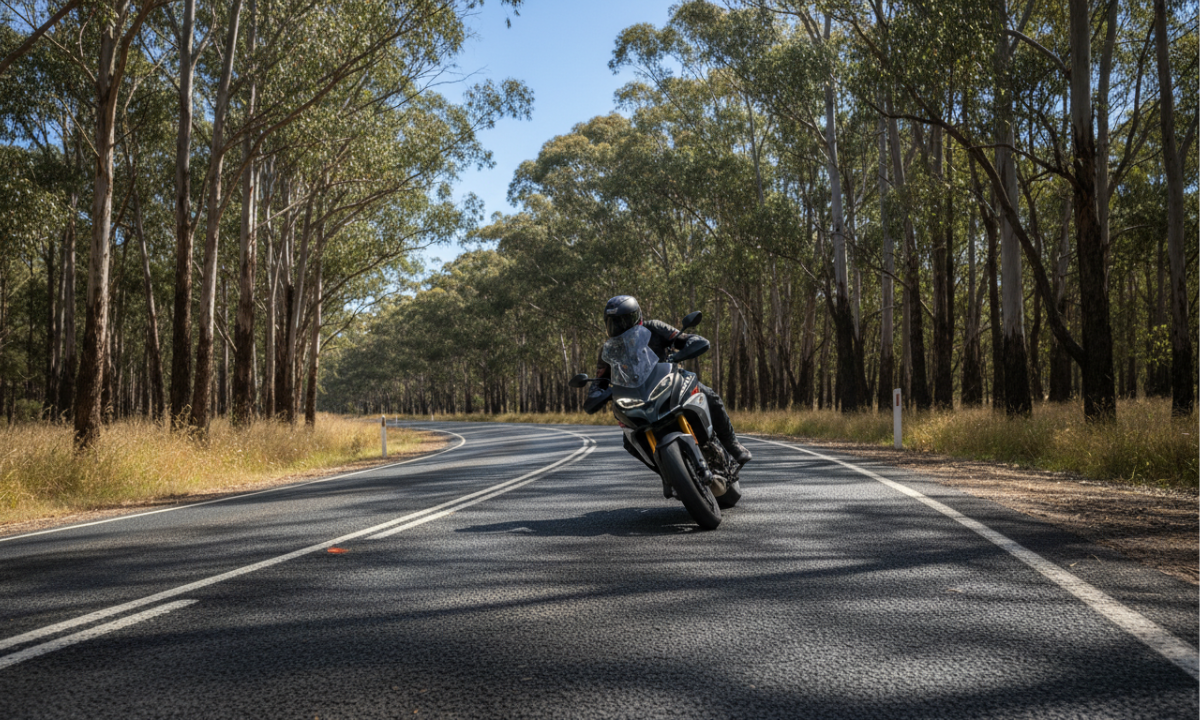
There are roads in Queensland which have earned grim reputations. The Mount Glorious Tourist Drive, stretching 27 kilometres northwest of Brisbane, topped RACQ's analysis of the state's most dangerous motorcycle corridors. Between 2019 and 2023, 92% of the 54 fatal and serious injury crashes on this road involved motorcyclists.
The Mount Glorious data reveals something crucial: 96% of these crashes occurred in daylight and in clear, dry conditions. Weather doesn't seem to be the issue, and neither does visibility.
Instead, 94% happened on curves, and 80% were single-vehicle crashes. Riders seemed to lose control on bends while driving on roads they could see clearly during optimal riding conditions.
This pattern points directly to the intersection of rider skill, road design and speed management when it comes to motorcycle crashes.
The Human Cost Beyond Death
For every motorcyclist who dies while riding in Queensland, there’s another 35 hospitalised with serious injuries. Motorcycle crashes often result in catastrophic trauma: severe head injuries despite the use of helmets, spinal cord damage, multiple fractures, road rash which requires skin grafts and internal organ injuries.
It can take months or even years to recover after a motorcycle accident, and many riders end up with permanent disabilities.
Motorcyclists face 30 times higher fatality risk per kilometre travelled compared to people in cars, and are 41 times more likely to suffer a serious injury. These aren't marginal differences, they are a fundamentally different, and more serious, exposure to harm.
Also read: Australian Motorcycle Accidents and Injuries: Trends, Statistics and Support Options
Why Motorcycles Are Uniquely Vulnerable
This disparity in fatality risk stems from fundamental differences between cars and motorcycles in a crash.
Physics Doesn't Negotiate
A car is an engineered cocoon. Crumple zones absorb impact energy, airbags cushion occupants and seatbelts restrain them from the worst of a crash.
A motorcycle offers none of this. There's no structure between the rider and the road, which means there’s also no buffer between flesh and impact. When a motorcycle collides with another vehicle or object, the rider absorbs the force directly.
This explains why motorcycle crashes frequently produce life-threatening injuries, even at speeds that would result in minor damage in car collisions.
Invisible Until It's Too Late
Motorcycles have a much smaller visual profile than cars. This isn't just about physical size, as car drivers subconsciously scan for vehicle-sized objects at specific heights.
Motorcycles fall outside these ingrained search patterns, rendering riders visible in the optical sense but invisible in the cognitive sense.
This is a huge reason for the prevalence of left-turn collisions, which is when drivers turn across the path of oncoming motorcycles they genuinely didn't see.
Roads Built for Four Wheels
Australian road infrastructure is a reflection of design standards that have been optimised for cars, leading to an array of serious hazards for motorcycles that car drivers never notice.
Take gravel breakdown lanes. In a car, drifting slightly onto the breakdown lane is just a little bump. On a motorcycle, it can be catastrophic: the front wheel hits loose gravel, traction is lost and the bike is uncontrollable in a flash.
Road surface conditions are also a huge factor for motorcyclists. Potholes, diesel spills and loose gravel are all hazards that car drivers barely register, but which are significant dangers to motorcycles.
Even curve design creates problems. Road banking and marking are optimised for cars, while a motorcyclist must lean into turns, illustrating the mismatch between road design and motorcycle dynamics.
The Human Factors
Rider behaviour and skill significantly influence the risk of crashing, but not always in the ways you might expect.
The 75% increase in young rider deaths in Queensland during 2024 suggests that experience gaps are widening, not closing. New riders face a steep learning curve and must quickly master not just motorcycle control, but also hazard perception and motorcycle-specific risk management.
The margin for error is razor-thin for motorcyclists, and it’s difficult to gain experience when the stakes are so much higher in comparison to driving a car.
The wearing of proper protective equipment is also inconsistent despite the overwhelming evidence of its effectiveness. Helmets are mandatory and compliance exceeds 95% in Queensland, but full protective gear (jacket, gloves, boots, armoured pants) lags behind because of issues with cost, comfort and perceived inconvenience, particularly for younger and newer riders.
Other Road Users
Car drivers play their own critical role in motorcycle safety, but the majority are unaware of how to safely share the road with riders.
Not only do most car drivers find it difficult to see motorcycles, they also misjudge speed and distance when they do see them. Motorcycles can create optical illusions, whether that’s appearing farther away than they actually are or appearing to travel more slowly than their actual speed.
This often results in intersection crashes, which is when drivers turn across the path of an approaching motorcycle because they genuinely believe they have enough time and space.
Distraction is another common problem, as a rider must make constant micro-adjustments to maintain stability, and can easily get distracted and drift into danger before they even realise.
What's Working (And What Isn't)
Queensland's response to the motorcycle safety crisis has accelerated in 2025, though whether current measures will prove sufficient remains uncertain.
Policy Response
In April 2025, Queensland held its first Motorcycle Safety Roundtable. Bringing together government officials, road safety experts and motorcyclist representatives, the roundtable acknowledged the crisis and committed to exploring and implementing evidence-based interventions.
Since 2019-2021, Anti-lock Braking Systems (ABS) have been mandated for all new road motorcycle models above 125cc sold in Australia. This represents a genuine step in the right direction because ABS significantly reduces the risk of crashing by preventing wheel lockup during emergency braking.
Helmet laws are Australia's most successful motorcycle safety intervention, with the combination of universal mandatory helmet requirements and high compliance demonstrably reducing fatal head injuries. However, helmets primarily prevent death from head trauma, they don't prevent crashes and they don’t protect the rest of the body.
Training Gaps
Getting a motorcycle licence requires less structured training than car licensing in Australia, and Queensland is no exception. The exact requirements vary, but generally involve a knowledge test, hazard perception test and practical riding assessment.
Unfortunately, comprehensive emergency manoeuvre training, advanced cornering techniques, wet weather handling and night riding skills are often missing from standard training.
Many of these skills can be learned through advanced training courses, but these are voluntary and limited, with cost, time commitment and lack of awareness all leading to reduced participation.
Crashes don't happen because riders can't see or conditions are treacherous, they happen because of lapses in skill and judgement that could be addressed with better training.
Infrastructure Shortfalls
Queensland's current road design standards weren't made with motorcycles as a priority consideration, and this is reflected in crash data.
Many areas need large-scale infrastructure assessment and redesign. This involves reevaluating sightlines, road surface quality, barrier types and marking visibility from a motorcycle safety perspective. Road maintenance and design continue to prioritise car traffic, with motorcycles considered almost as an afterthought.
Technology Adoption Challenges
There are an array of modern safety technologies for motorcycles, such as traction control systems that prevent rear wheel spin during acceleration and cornering ABS that adjusts braking force based on lean angle, but they're typically only found on higher-end motorcycles.
Cost is a significant barrier because safety technology can add hundreds or even thousands of dollars to a motorcycle's price, putting safer bikes out of reach for many riders, especially younger ones.
Technologies That Could Change Everything
Motorcycle safety technology is always evolving, with many new systems that could meaningfully reduce crashes and injury severity continuing to emerge.
Smarter Braking and Stability Systems
The latest cornering ABS adjusts braking force based on lean angle to prevent motorcycles from standing up during mid-corner braking. There are also combined braking systems that automatically engage both front and rear brakes in optimal proportion, as well as traction control that prevents rear wheel spin during hard acceleration or on slippery surfaces.
These systems work by constantly monitoring wheel speed, lean angle and throttle position, and intervening when they detect impending loss of traction. For motorcycle riders, braking remains smooth and steering stays predictable, but crashes that would have happened because of locked wheels or lost traction are much less likely to happen.
Visibility and Detection Innovation
If car drivers struggle to see motorcycles, can technology solve the visibility problem?
Several approaches have shown promise when it comes to rider visibility, such as using LED technology to create brighter, more attention-grabbing illumination, and making headlights pulse slightly to attract driver attention.
Vehicle-to-vehicle (V2V) communication technology has the potential to alert drivers to nearby motorcycles even when they're outside the driver's line of sight, and motorcycle-mounted radar and blind-spot detection systems can alert riders to vehicles in adjacent lanes or approaching from behind.
Wearable Protection Technology
Protective gear has evolved dramatically beyond traditional leather jackets and hard-shell armor.
Airbag systems designed for motorcyclists deploy in milliseconds when sensors detect a crash, and advanced helmet technology has impact-absorbing materials that are able to manage the rotational forces which cause concussions and brain injuries.
Some helmets integrate heads-up displays to provide navigation, speed and warning information without requiring riders to look down at instruments.
Real-Time Hazard Alerts
There is also promising technology emerging such as the groundbreaking motorcycle safety alert system from La Trobe University, which delivers real-time hazard warnings to riders about immediate road dangers before they become visible.
By using roadside sensors and connected infrastructure to gather real-time conditions, it can transmit warnings to riders.
Implementation Barriers
The primary obstacle to all these technologies remains cost and adoption timelines.
Most new motorcycles include some or all of these systems but they increase costs substantially, leaving many riders, particularly younger ones or those on limited budgets, a stark choice between riding an older, cheaper bike without safety systems and not riding at all.
Insurance incentives are a great way to accelerate adoption, as premium discounts for motorcycles equipped with ABS, traction control and other safety systems would create market pressure that encourages riders to choose safer bikes.
Redesigning Roads for Riders
Infrastructure changes offer the potential to protect all motorcyclists regardless of their bike's technology or their individual skill level.
Current Design Failures
Australian road design standards were created to cater to car traffic primarily. Speed limits, curve radius calculations, barrier specifications and surface treatments were all optimised for four-wheeled vehicles.
Guard rail design is a particularly complex challenge, as standard steel W-beam guard rails are designed to catch and deflect cars but can cause severe injuries or death from impact for riders.
Road surface quality is also much more important for motorcycles than cars. Potholes, surface deterioration and patching joints all create traction hazards, while painted markings and road studs become slippery when wet.
The solution is regular maintenance and monitoring of roads. Filling potholes promptly, using high-friction surface treatments in high-risk locations and ensuring road markings have higher friction coefficients instead of traditional paint will benefit all road users, and motorcycles in particular.
How Queensland Can Improve
High-risk corridors like Mount Glorious, Mount Mee Road and Beechmont Road need immediate attention. These roads see a disproportionate amount of serious motorcycle crashes, making them high-value targets for infrastructure intervention which can benefit all Queenslanders.
A phased approach might involve:
- Immediate safety audits from a motorcycle-specific perspective
- Quick-win improvements (enhanced signage, surface repairs, vegetation clearance)
- Medium-term projects (barrier upgrades, curve treatments, shoulder sealing)
- Long-term redesign of particularly problematic areas
The prevalence of crashes in specific places actually creates an opportunity as, rather than upgrading the entire road network at once, high-crash locations can be targeted for a relatively modest investment.
Training That Actually Prepares Riders
Motorcycle licensing tests cover basics such as straight-line riding, slow-speed slaloms, and emergency stops. However, they don't prepare riders for corner entry speed, hazard perception, wet weather or night riding. More importantly, they certainly don't address the scenarios that kill riders most often: misjudging speed, poor cornering technique and panic responses.
What does work?
Hazard perception training, which uses video scenarios. These videos help riders spot dangers earlier.
Emergency manoeuvre practice also builds muscle memory for braking and swerving. Additionally, psychological skills training tackles target fixation (staring at hazards and steering into them) and overconfidence.
After taking tests, trained riders show improved hazard perception, better emergency responses and fewer crashes. Yet, the challenge is quality control as some courses focus on track-day skills that don't translate to road safety.
Evidence of Effectiveness
Evaluation data from advanced training programs has shown positive results, although this does vary by program and rider population.
Trained riders generally show:
- Improved hazard perception speed and accuracy
- Better emergency braking and swerving performance
- More accurate self-assessment of skill versus conditions
- Reduced crash rates (though measuring this requires long-term follow-up)
The challenge is ensuring training quality remains high, and standardisation of procedure across Australia. Some advanced courses emphasise track-day performance skills that aren't relevant (and may be counterproductive) for road safety, while others provide excellent instruction but reach limited audiences.
Developing national training standards and accreditation for advanced rider training would help ensure quality and allow clearer evaluation of outcomes.
Moving Forward
The Queensland Motorcycle Safety Roundtable signals that business-as-usual isn't enough. The question is whether it translates into sustained action. Infrastructure upgrades, better barriers, surface treatments and curve improvements on high-risk roads like Mount Glorious, could reduce fatalities now.
Rider training needs to go beyond basic licensing toward real competence in emergency manoeuvres and hazard perception. Insurance incentives could make safer bikes more financially accessible.
Motorcycles don't have to be overrepresented in road deaths. It's the result of choices about infrastructure, regulations, training and priorities. Different choices would produce different outcomes. The evidence exists. The technologies exist. Queensland needs to act on both.