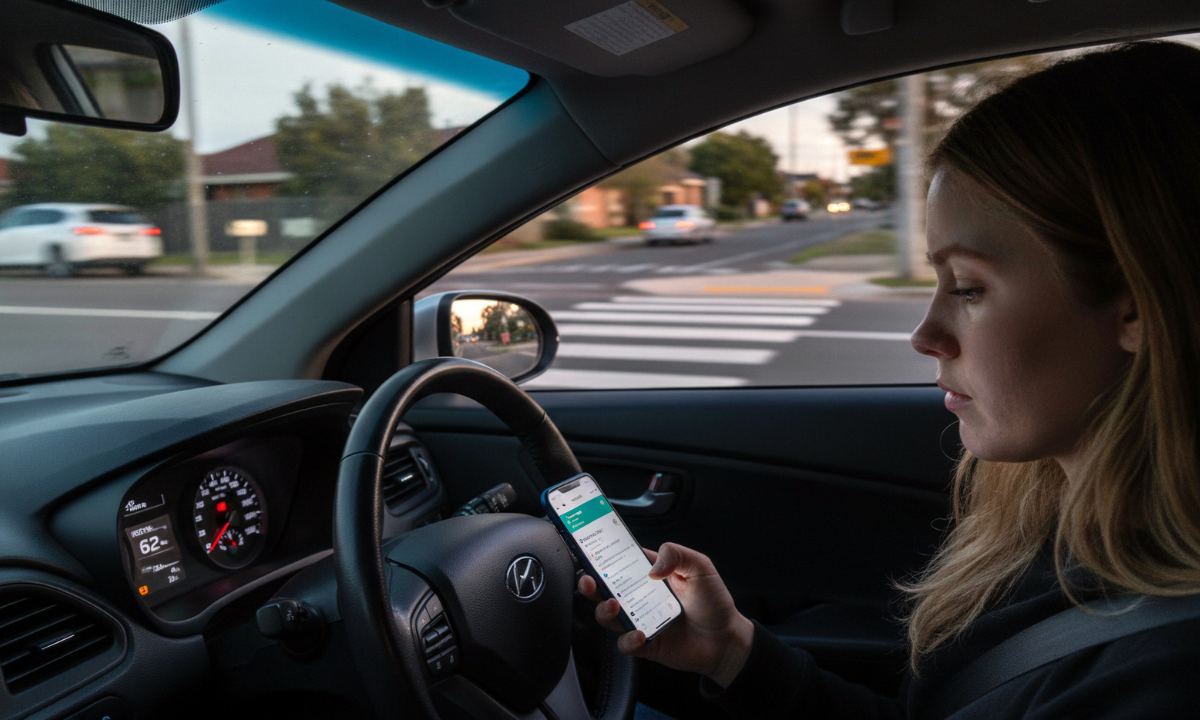
Here's a sobering reality check: in the first six months of 2025, 652 people in Australia died on our roads, a 5.3% jump from the same period last year. August alone saw 118 deaths, which is a 25.8% spike above the five-year average. And although every age group is impacted, there's one demographic that’s consistently in the spotlight: Gen Z drivers.
A recent poll showed that nine out of ten Australians believe young drivers under 25 are the riskiest on the road. In fact, Australia leads the way when it comes to concern about Gen Z behind the wheel across the globe, comfortably ahead of the UK and US.
But here's the thing: Gen Z isn't inherently reckless. They're growing up with the most advanced vehicle safety technology in history, such as adaptive cruise control and collision warnings, but they're also the first generation raised with smartphones as an expectation from a young age.
The good news is that most crashes involving young drivers are preventable. They're linked to five specific behaviours known as the Fatal Five, and all of them can be made into safe habits with the right approach.
This isn't about lecturing young people or fear-mongering, it's about practical strategies that actually work and which can keep every Australian driver safer.
What Are The Fatal Five?
The so-called “Fatal Five” are the behaviours most consistently linked to serious crashes and deaths across Australia. They're the focus of every major road safety campaign and education initiative for a reason.
Speed remains the most visible killer. Many people die on high-speed highways every year, but an unexpected problem has been the low-speed zones under 40 km/h.
Distraction is another huge issue, especially when it comes to phone use. FOMO isn't just a social media thing, it's a genuine psychological driver that leads many people to feeling like ignoring a notification is impossible. But at 100 km/h, reading a five-second text means you've travelled 139 metres blind... That's a full football field with eyes off the road!
Fatigue is the silent killer. Research shows that 58% of young adult road deaths happen in single-vehicle crashes, which is when drivers simply lose control. Tiredness is a huge contributing factor to this.
Impaired driving covers more than just drink driving, it includes illicit drugs, prescription medications that affect concentration and combinations of substances. Queensland maintains zero tolerance for learner and provisional license holders when it comes to alcohol, and roadside drug testing is increasingly common.
Not wearing seatbelts sounds almost too basic to mention, but non-compliance remains an issue amongst young drivers, who sometimes see seatbelts as restrictive rather than protective.
The Gen Z Driving Reality
While 90% of Australians label Gen Z as risky drivers, 70% of global motorists believe experience rather than age is the actual defining factor for road safety. That's a crucial distinction.
Gen Z aren't inherently dangerous drivers. For many young drivers, a car represents independence, access to employment and social connection. Most 18-27-year-olds use a car as their main method of transport, which means losing a license isn't just inconvenient, it’s a threat to livelihood, education, and friends.
That pressure creates stress that feeds back into risky behaviour when trying to avoid danger and consequences.
From Risky Behaviour to Safe Habits
Changing behaviour is about much more than willpower. It's about building systems that make safe choices automatic.
Here's how to tackle each Fatal Five behaviour with practical strategies that have long term effects.
Speed: Building Awareness Before It Becomes Habit
Speed isn't just about going fast on highways. The data shows deaths are rising fastest in residential zones under 40 km/h, which suggests overconfidence on familiar streets.
Create mental checkpoints that trigger automatic speed awareness. When you enter a residential area, that's your cue to check your speed.
The habit formation approach here is linking speed compliance to specific visual triggers. This way, you're not constantly monitoring your speedometer, you're building an automatic response.
At 100 km/h versus 80 km/h, your stopping distance increases by 36 metres. That could be the difference between stopping in time or not.
Distraction: Physical Barriers That Work
Despite widespread awareness of the dangers, risky road behaviours remain deeply embedded in Australian culture.
Physical placement is non-negotiable. Keep your phone in the glove box or back seat, or give it to a passenger. This removes the temptation entirely. You can also enable Do Not Disturb While Driving mode on your phone.
Pre-drive rituals are also a great tool. Send a quick message to your most frequent contacts saying: "Driving now, talk in 20." This manages expectations and reduces FOMO. If you need navigation, set it before you start driving and commit to not touching it while moving.
Here’s the positive habit loop: getting in the car is the cue, securing your phone is the routine and the reward is knowing you're in control and safe!
Fatigue: Recognising Your Personal Warning Signs
Single-vehicle crashes often involve fatigue or loss of control. Microsleep episodes can last just 1-2 seconds, but that's 28-56 metres of completely uncontrolled travel at highway speeds!
It’s important to learn your personal fatigue triggers. Everyone's different. Some people hit a wall after 2pm, while others struggle on familiar routes where autopilot kicks in.
A 20-minute power nap, a coffee (which takes 30 minutes to kick in, so factor that in) or calling someone for a lift are all good strategies for if you’re tired before a shorter drive.
For long drives over two hours, plan rest stops every 90 minutes before you leave. If you're travelling with friends, rotate drivers. Use rest areas for actual rest, so you should get out and walk around, or even do jumping jacks if needed!
Night driving after a full day of work or study is high-risk territory, so always be honest with yourself about whether the trip is essential or can wait.
Impairment: Pre-Commitment Strategies
Queensland's zero alcohol tolerance for learner and provisional license holders is strict for a reason, and it extends beyond alcohol to illicit drugs and prescription medications that affect concentration.
Pre-commitment is your best tool. Decide on a designated driver before going out, use rideshare apps or take a taxi. These decisions are easy when you're sober, but much harder after you've had a drink.

If you take prescription medication (ADHD medication, antidepressants, strong pain relief, etc.), talk to your doctor or pharmacist about driving safety because some medications cause drowsiness or affect reaction time.
Make it standard in your friend group standard that no one drives impaired. Peer pressure works both ways; it can normalise safe behaviour just as easily as risky behaviour.
Seatbelts: The Simplest Habit to Build
This one should be automatic, but non-compliance is still common, especially on short trips or familiar routes.
Make seatbelts a car-start requirement. You don't turn the key or press the start button until every person in the car is belted, no matter what.
If you're a passenger, buckle up immediately and set the standard for others in the car. Don't wait for the driver to remind you.
The habit here is so simple it almost feels silly to mention, but consistency matters.
When Rules Reinforce Habits
Queensland Police and Transport and Main Roads regularly run targeted enforcement campaigns on the Fatal Five. These aren't just about catching people out, they create consistent accountability and encourage safe driving.
Fixed and mobile speed cameras, random breath testing, roadside drug screening and seatbelt compliance checks all serve the same purpose: removing the "choice" element from risky behaviour. When the consequences are consistent and likely, your brain stops weighing up whether to speed or check your phone. The decision has already been made.
Safe Driving Action Plan
Changing ingrained behaviour doesn't happen overnight, but good habits start with consistent, small, positive behaviours.
Pick your focus. Which of the Fatal Five resonates with you most strongly? If you check your phone at red lights, start there. If you've been driving tired, focus on fatigue management first.
Set up your system. Make safe behaviour easy and automatic by removing barriers and creating cues. Put your phone in the glove box And give yourself an honest fatigue self-assessment before starting the car.
Involve others. Share what you’re working on with a friend or family member. Accountability helps!
Adjust as needed. If something isn't working, adjust your different approach. Remember, the goal is sustainable behaviour change, not perfection.
For parents, this means being an example of the behaviour you want to see. Your teenager watches how you drive more than they listen to what you say about driving, so discuss enforcement campaigns and education initiatives without lecturing them.
Making Safe Driving the Norm
This isn't about blaming Gen Z, it's about recognising that the startling number of road deaths involving them are preventable.
Safe driving is built through experience and habit formation. Enforcement creates accountability, education provides knowledge, but it's ultimately the individual drivers making daily choices that determine outcomes.
Gen Z has the potential to be the safest generation of drivers in history. They've grown up with more safety technology, data and awareness than any previous generation. The challenge is translating that into action by building habits that stick when no one's watching.
Which Fatal Five will you tackle first? Your answer to that question could save your life or someone else's. And that's not dramatic, it's the reality of hundreds of preventable road deaths in Australia.
Make the choice. Build the habit. Be the change.
Where to Learn More
Queensland Resources:
- Queensland Police Service: Road safety campaigns and enforcement information
- Transport and Main Roads Queensland: Current road safety statistics and campaigns
- Australian Road Safety Foundation: Education programs and youth initiatives at arsf.com.au
- Budget Direct Road Safety Survey: Annual data and trends at budgetdirect.com.au/car-insurance/research
- Road Safety Data Hub: Detailed statistics on young drivers at datahub.roadsafety.gov.au
Talk to your school, workplace, or youth organisation about road safety programs. Many offer peer-led education sessions specifically designed for young drivers. Get involved, share what you learn and make safe driving part of who you are, not just something you do to avoid fines.