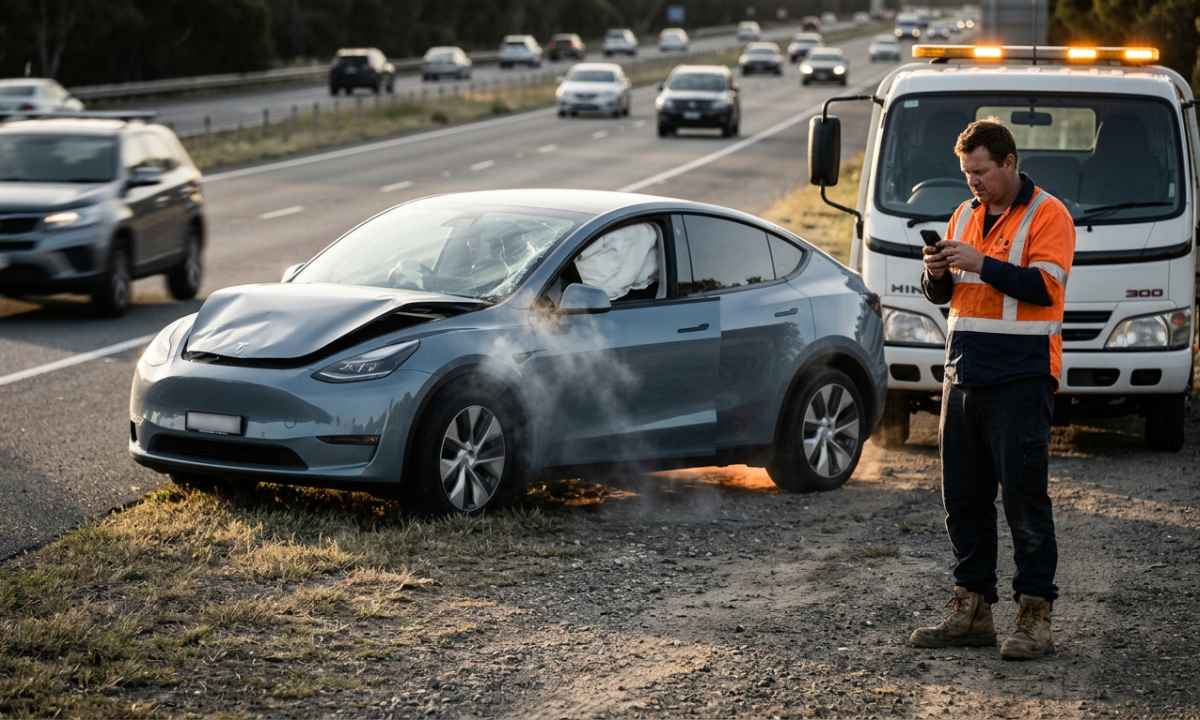
Electric vehicles are safer than petrol cars in almost every way.
On testing:
- They're less likely to catch fire.
- They perform better in crash tests.
- They have lower centres of gravity, meaning they're harder to roll.
But ‘going wrong’ with an EV often means something completely different to what we’re used to with petrol vehicles. And Australia's emergency services are scrambling to keep up.
The issues remain as serious as ever: from battery fires that reignite days after being extinguished to door handles that disappear into the bodywork, potentially leaving trapped passengers with no way out.
It’s time to ask how ready the emergency services are, and we are when it comes to these new safety challenges.
The Fire That Won't Die
Let's get the big myth out of the way first.
Electric vehicles are significantly less likely to catch fire than petrol or diesel cars.
EV Fire Safe, an Australian research group funded by the Department of Defence, tracks every EV battery fire on Australian roads. As of early 2025, there had been just 10 electric car battery fires in Australia during normal use, across more than 350,000 EVs on the road.
Compare that to internal combustion engine vehicles, where the fire risk is estimated to be between 20 and 80 times higher. EVs experience roughly 25 fires per 100,000 vehicles sold, versus 1,530 fires per 100,000 for petrol and diesel cars.
So EVs are safer on the fire front. End of story?
Not quite. While EV fires are rare, when they do happen, they're a completely different beast.
A petrol car fire burns hot and fast. Firefighters know how to deal with it. Well-understood measures can be taken from years of knowledge: water, foam, containment.
An EV battery fire, however, involves a phenomenon called thermal runaway, a cascading chemical reaction within the lithium-ion cells that generates extreme heat and is extraordinarily difficult to extinguish. The fire can burn for hours, even sometimes for days at a time. It produces toxic gases, including hydrogen fluoride. And most frustratingly for firefighters, it can reignite long after it appears to be out.
Fire & Rescue NSW states that EV vehicle fires tend to include fire and explosion, radiation, heat, chemical and electrical risks. The toxic fumes produced from chemicals include heavy metals: arsenic, cadmium, and lead, which are known carcinogens. Research from the International Association of Fire Fighters has linked exposure to EV fire smoke with elevated cancer risks for first responders.
Research conducted in 2025 by the Fire Safety Research Institute (FSRI) and the Fire Protection Research Foundation (FPRF) found that fire blankets used on burning electric vehicles could trap flammable gases released during battery thermal runaway. Researchers warned that, under certain conditions, the resulting gas build-up could create an explosion hazard for firefighters operating near the vehicle.
The equipment, the training, the methods to tackle a blaze, everything about fighting an EV fire is different. And with over 410,000 EVs now on Australian roads and sales hitting record highs, the frequency of these incidents is only going to increase.
Read our article on: Electric Car Safety: Myth or Fact
The Door Handle Problem
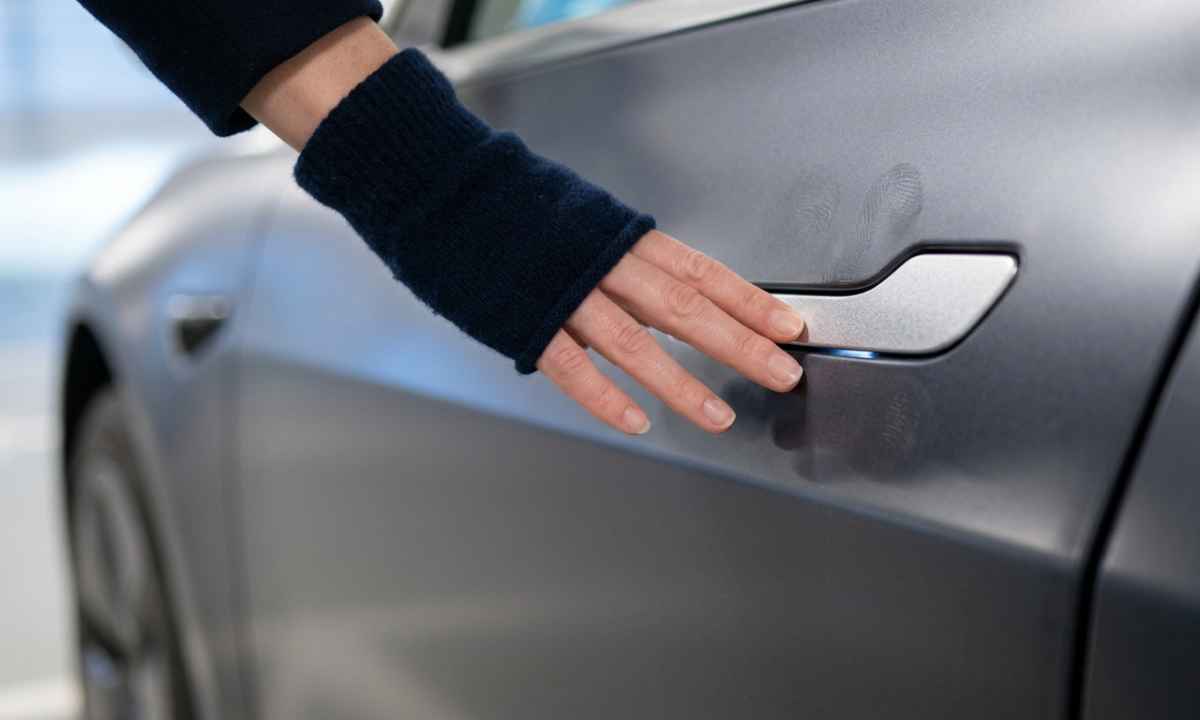
You've probably noticed the trend in modern car design: flush door handles that sit flat against the body of the car, popping out (or requiring a specific press-and-pull motion) to open the door. Sure, they look sleek and have a minimal effect on aerodynamics, but in an emergency, the cons almost always outweigh the pros.
In February 2026, China became the first country in the world to ban concealed door handles on vehicles, effective January 2027. The decision came after a string of fatal incidents where electronic door mechanisms failed during crashes, leaving passengers unable to escape. The logic is simple: don’t overcomplicate something that should be simple.
As part of this legislation, all car doors must include a mechanical release function. Handles must have at least 60mm by 20mm of recessed space behind them, enough for a human hand to grip, even in panic, even in the dark, even with injuries.
The most widely reported case involved a Xiaomi SU7 vehicle where the driver was trapped by inoperable doors after a collision. Investigators concluded that it was the low-voltage system used to activate the door handles that failed following the fire.
In a lawsuit arising from a fatal 2024 Cybertruck crash in California, the sole survivor alleges that Tesla's electronic door system failed after the collision, preventing occupants from escaping and hindering rescue efforts. Three young passengers died in the fire.
A preliminary investigation has been filed in the US into the need for more regulations that support a compulsory mechanical door release feature. At the same time, in Australia, there have been calls, most notably from the head of the Australasian New Car Assessment Program (ANCAP), for the government to make it harder for vehicles with flush or electronic handles to achieve a 5-star safety rating. Similar calls have been made for design practices that prioritise safety by enforcing mechanical release mechanisms.
What Firefighters Are Actually Dealing With
As with any new technology, it takes a while for the emergency services to catch up, have new tools at their disposal and implement adequate training.
Traditional vehicle rescue follows a well-practised sequence:
- Stabilise the vehicle
- Disconnect the battery (a 12-volt system you can isolate in seconds)
- Cut through the chassis if needed
- Extract the people inside
With an EV, every step of that sequence changes.
The battery isn't a small box under the bonnet; it's a massive pack that runs the entire length of the floor. Cutting into the wrong part of the vehicle can puncture cells and trigger thermal runaway. The high-voltage system (typically 400–800 volts) means that standard ‘disconnect the battery’ procedures don't apply.
Firefighters need to identify the specific model of vehicle and follow manufacturer-specific shutdown procedures. This adds a delay when time is of the essence. Factor in severe damage to the bodywork or working in the dark, and this task might not be as simple as it first sounds.
While new training is almost certainly required for vehicle accidents in light of the above, Queensland Fire and Emergency Services have even identified new building risks associated with EVs. These are twofold:
- The fire risk to the carpark or other buildings where EVs are parked
- The fire risk in carparks, given that many will now have built-in charging stations.
Additionally, the gear firefighters wear at an EV fire may itself become contaminated. Due to potential heavy-metal contamination, acids, and persistent chemicals, all gear and apparatus require rigorous decontamination, a process that takes significantly longer and costs significantly more than cleanup after a conventional vehicle fire.
Also read: Your Car Can Drive Itself. Your Insurance Company Has No Idea What That Means
The Tow Truck Problem
A damaged EV in which the fire has been put out still poses a hazard. The battery pack might have been compromised in the crash without any visible signs from the exterior. EV Fire Safe's research notes that ‘fire reignition’ can occur days or even weeks after a battery is damaged. In one case, an EV reignited after a total of 68 days. The same research found that 13% of the vehicles studied reignited after the initial suppression.
This creates a cascading problem. Tow truck drivers need to know how to safely move a damaged EV. Salvage yards need to store them with appropriate separation distances. Mechanics working on damaged EVs need training on high-voltage systems that can still be live even when the vehicle appears ‘off’.
New standards are being worked out as we speak, but these take time.
What Happens Next
The adoption of EVs is expanding in Australia and will likely continue to grow. Within a decade, they'll be a significant portion of Evs on every Queensland road.
While this article has focused on some concerns, it’s important to bear in mind that they're cleaner, they're safer in most scenarios, and they're the future of personal transport, and that’s why they’re here to stay. But the emergency response infrastructure needs to catch up quickly.
That means more training for firefighters, paramedics, and tow truck operators. It means regulations around door handle design that prioritise safety over aesthetics. It means funding needs to be in place now, not after the next major headline about an incident that could have been avoided.
The vehicles are already here. The question is whether we're ready for what happens when something goes wrong with them.