
Most working Australians have no idea whether they hold disability insurance.
We have been working in compensation law exclusively since 1996, and over the course of those 30 years, our new client team has spoken with thousands of injured and ill Australians about the cover that’s included within their super.
Recently, more than 90 people contacted us regarding one of these claims in a single month.
Around half of the people we speak to here at Smith’s Lawyers regarding a superannuation insurance claim, also known as Total and Permanent Disability or TPD cover, don’t know whether they hold it at all, let alone its value.
That’s one of the most common reasons people who could make a TPD claim don’t. Superannuation insurance is one of the most misunderstood forms of cover in Australia. Confusion starts with the name itself, and continues all the way through to how a TPD payout is taxed.
This article discusses the myths our new client team hears again and again so you can avoid making the same incorrect assumptions that cost thousands of Australians the financial support they are entitled to, and desperately need when the worst happens.
Myth 1: "I don't have any insurance"
Most people with superannuation also have insurance.
"I didn't even know I had it, and I've apparently been paying for it out of my super for years!" Our new client team hears versions of that line almost every week.
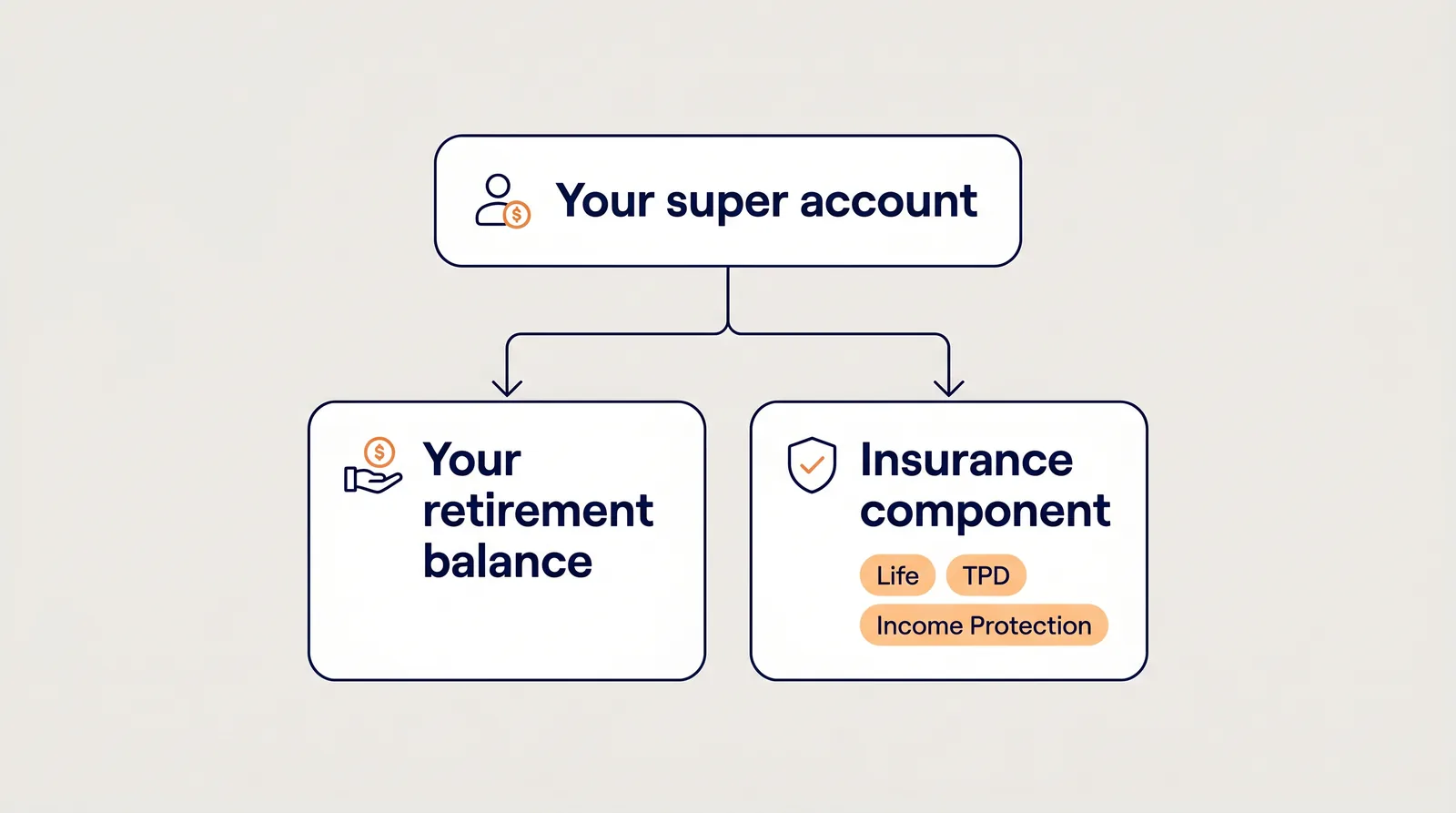
According to the Australian Government's Moneysmart website, most super funds automatically include three types of cover: life (death) cover, total and permanent disability cover and income protection. These are bundled into your account and funded by premiums drawn from your balance.
By law, default life and TPD cover begin once a member is 25 or older and has a balance of at least $6,000 (Moneysmart), but certain high-risk occupations can sit outside that rule.
This cover commences without a phone call or a signature, which is why people are so often surprised to discover they have insurance.
Myth 2: "Total and permanent means I can never work again"
This is the single biggest point of confusion, and it’s also the reason many people who suffer a total and permanent injury don’t make a claim.
"I thought total and permanent meant you had to be totally, permanently done," is how one person described it to us. It’s an understandable assumption to make, but it’s also wrong.
"Total and permanent disability" does not mean you are bedridden, and it does not mean you can never earn another dollar. Most policies test whether you are unable to return to a role you’re suitable for by training, education or experience.
That distinction is key. An "own occupation" definition is when you can do the specific job you were trained for, while an "any occupation" definition is when you can do any suitable work at all. “Own occupation” is easier to prove.
Since 1 July 2014, new "own occupation" TPD cover can no longer be taken out inside a super. This is because only the "any occupation" definition aligns with the permanent-incapacity condition of release under the Superannuation Industry (Supervision) Regulations 1994. Policies taken out before that date were grandfathered, so there are people who still hold the older, broader cover without realising.
The most important thing to know here is that your policy's specific wording is what decides whether you qualify, not your own sense of whether you are "disabled enough."
The people worst affected by a condition are often the ones most convinced they won't qualify for a TPD payout.
Myth 3: "Claiming will drain my retirement savings"
"Does this come out of my actual super, or is it separate?" is one of the questions our team hears most often, but TPD payouts don’t come out of your retirement balance.
TPD insurance is a separate component of your super that’s paid for by your premiums, not a withdrawal from your retirement savings. TPD claims are paid out by the insurer; your accumulated balance is a completely different pool of money.
The sum you are paid out is set by the policy, it isn’t based on projected lost income or years of work remaining. Two people the same age with the same injury can get very different benefit amounts depending on the cover attached to their fund.
You don't have to be injured at work
TPD is often confused with workers' compensation, but they are not the same thing.
Workers' compensation is for injuries connected to your job, while TPD is for an injury or illness stemming from almost anything, on or off the job. A car accident on a weekend, an illness that has nothing to do with work or a condition that developed over years can all potentially earn a TPD payout.
Psychological conditions also count; depression, anxiety, PTSD and bipolar disorder can all support a TPD claim if they prevent you from working. Almost half the people who come to us for advice on TPD have a psychological condition.
A mental-health claim is not a lesser claim.
Myth: "It's too late, my policy lapsed or I rolled over my super"
Many people we speak with assume that a cancelled or lapsed policy is a lost cause, but this often isn't the case. "They sent me a letter saying they were cancelling it, so can I still claim?" is a question we’re asked all the time, and the answer is frequently yes.
A TPD claim is generally attached to the date you became disabled, not the date you lodge it. If your cover was active when you had to stop working because of your injury or illness, you may still be able to claim even if the policy has since ended.
There are two traps that catch a lot of people out. The first is that under the Australian Government's Protecting Your Super rules, funds cancel insurance after 16 months with no contributions (Moneysmart). An inactive account may have lost its cover.
The second is that consolidating or rolling over a super can end up cancelling the insurance attached to the old fund. Merging accounts is often a good idea, but it can void a claimable TPD policy in the process, so it’s always worth checking the cover that exists before combining funds.
You might be covered more than once
Because cover is attached to super accounts, a person who has had several jobs may hold several super accounts, and therefore several TPD policies. The key point is that it’s possible to claim on more than one.
This is a complicated area, but the most important thing to remember is you should never assume the first policy you find is the only one you have.
Old accounts from previous employers can have cover that is still claimable, so it is always worth tracking down every fund you have ever belonged to, which is a process bodies like Super Consumers Australia have written about extensively.
If your claim is knocked back, you have somewhere to go
Insurers assess claims against the policy definition, and according to claims data published by the Australian Prudential Regulation Authority, many claims are declined. However, a decline is not necessarily the end of the road.
If a super trustee or insurer rejects your claim, the free option for contesting it is the Australian Financial Complaints Authority (AFCA), which can review the decision at no cost to you. Time limits apply, and they are specific.
For a declined TPD claim, an AFCA complaint must be lodged within 4 years of the trustee's decision if you stopped working because of the disability, or within 6 years if you stopped working for an unrelated reason.
More generally, complaints must be made within 6 years of becoming aware of the rejected claim, or within 2 years of an internal dispute resolution response. Missing these deadlines can close off your avenue to compensation, so it’s vital to remember them.
What about tax?
A TPD payout can be taxed, and this is something that catches many people by surprise.
When someone under 60 is paid out, the taxable component can be taxed at up to 22%, including the Medicare levy.
A disability benefit can qualify for a tax-free uplift that reduces the amount taxed, and how it applies depends on your age, the components of the benefit and your individual circumstances. We highly recommend seeking professional advice on this issue.
What this actually means for you
The common theme with all these myths is that the assumption people make is usually more pessimistic than the reality.
Most people assume they aren't covered, that they don't qualify, it's too late to claim, or that claiming will cost them their retirement.
However, in most cases, none of those is true.
A few things you should to do to maximise your chances of success are checking every super account you have ever held, not just your current one; reading the definition your policy uses, because "own occupation" and "any occupation" lead to different tests; and looking closely before consolidating funds so you know what cover you might be giving up.
If your claim is declined, remember that the AFCA can help you and the clock is ticking on your ability to make a claim. Understanding what you actually hold is the first step.
For many Australians who can no longer work, it often turns out they have been protected all along, and simply never knew it.