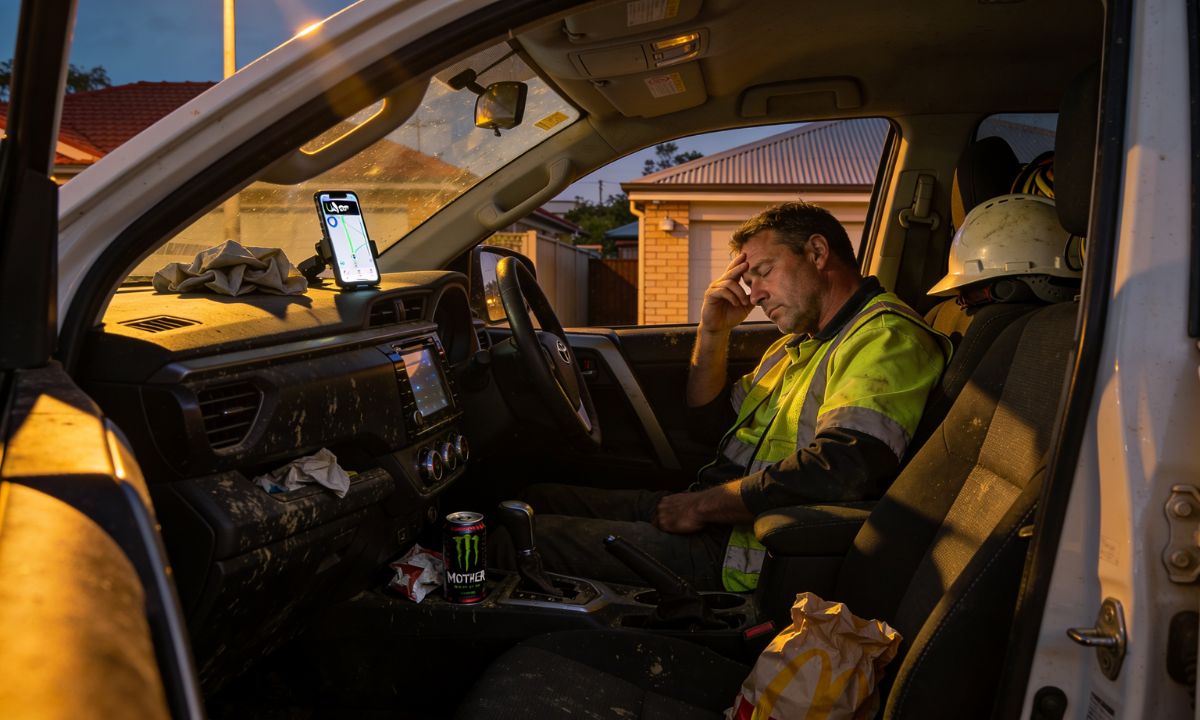
You've just wrapped a 10-hour shift on the tools, and now your body is aching in that familiar way. But instead of heading home, you fire up the Uber app for another four hours because the rent doesn't care about your exhaustion. Your reflexes feel a half-second behind, and somewhere in the back of your mind, you know this pace can't last.
Across Queensland, 6.5% of employed people are juggling multiple jobs and clocking hours that human bodies simply weren't built to sustain. Injuries from these stacked schedules are surging, turning what should be minor slips into life-altering events.
The Stacked-Job Reality Hitting Queensland
The cost-of-living squeeze isn't some abstract economic theory when you're staring at a grocery bill that's doubled or a rental increase notice. It's real, and Queensland workers are responding the only way they know how, by adding more hours.
The patterns are everywhere once you start looking:
The tradie who drives. Construction from 7am to 5pm, then rideshare from 6pm to 11pm, with weekend bar shifts to cover the gap. Sleep becomes something you fit in between, rather than something you prioritise.
The retail worker who delivers. Full-time shop floor during the week, then delivery apps during peak hours. Two or three hours less sleep each night becomes the norm.
The hospitality worker who stacks shifts. Restaurant work plus retail, because one job's casual hours never quite add up to enough.
Queensland's gig economy participation has exploded, driven by workers trying to bridge the gap between what they earn and what life costs.
Also read: What Rights Do Workers in the ‘Gig’ Economy Have?
Fatigue Multiplies Everything
Ever wondered why that routine task you've done a thousand times suddenly goes catastrophically wrong? Fatigue fundamentally changes how your body and brain function, multiplying risks in ways most workers don't realise until it's too late.
When you're running on 17-19-hour days, your reaction times can drop by 50%. That means, when it comes to that ladder you've climbed hundreds of times, your body doesn't respond the way it should when you start to lose balance.
The Three Ways Fatigue Breaks You
Driving becomes deadly. Micro-sleeps hit without warning, resulting in your brain shutting down for seconds at a time while your hands are still on the wheel.
Simple tasks turn catastrophic. Workplace slips rank as the second leading cause of serious injury claims across Australia. When fatigue sets in, minor hazards like wet floors or uneven surfaces become genuine threats.
The cumulative toll compounds. That repetitive lifting you're doing for your delivery app gig? It's weakening your performance in your primary job. In 2024, body stress accounted for over a third of serious claims, and when you're stacking jobs, every strain adds to the next.
The Liability Grey Zone
Here's where things get messy. When you’re injured from juggling multiple jobs, which employer is responsible? The answer isn't nearly as clear as it should be, and that ambiguity often works against workers trying to claim what they're owed.
Queensland's Workers' Compensation and Rehabilitation Act prioritises your primary job's insurer. The issue is that you may not be covered if the injury happens during your second job, especially in the gig economy, where there’s usually no coverage.
But it's the cumulative injuries that create the real grey zones. Insurers start arguing about where the injury really came from, splitting liability or denying claims outright.
Consider a plumber who hurt his shoulder lifting kegs at his pub gig. His plumbing firm's insurer argues it’s ‘pre-existing’ from overtime fatigue working at the pub. The pub claimed it wasn't their responsibility because he was only casual. Meanwhile, he's stuck, unable to work either job, caught between two insurers pointing fingers at each other.
How Insurers Use Your Second Job Against You
Insurers have refined their playbook when it comes to workers juggling multiple jobs, and understanding their tactics matters if you're ever in the position of making a claim.
The ‘pre-existing condition’ argument gets deployed early and often. Insurers frame it as something that existed before the specific incident they're being asked to cover. They'll cite your unreported side hustle as a personal lifestyle choice rather than an economic necessity, potentially slashing payouts.
Then there's the proof burden they place on workers. They'll demand documentation showing your injury arose solely from the insured employment, conveniently ignoring the cumulative nature of fatigue and strain.
The TPD Complication
For workers whose injuries tip into permanent disability territory, Total and Permanent Disability claims through superannuation become relevant. But here's the catch: TPD policies assess whether you can work in your ‘own occupation’ or sometimes ‘any occupation.’
When insurers spot those second and third jobs in your history, they use them to argue you're still capable of some form of work, usually lighter duties. Then, the multi-job exhaustion that pushed you into permanent disablement in the first place becomes ammunition against your claim.
Knowledge is your best defence. Document everything, from the hours you're working across all jobs to every symptom and near-miss. The more records you have, the harder it becomes for insurers to rewrite your story.
When Hustle Culture Meets Hard Reality
Social media sells a particular dream of rise and grind, where side hustles are seen as badges of honour. Multiple income streams are positioned as a smart financial strategy rather than a survival necessity.
But scroll past the motivational quotes, and the reality looks different. Chronic pain claims have surged among overworked Australians. Crashes driven by fatigue have shattered families, while relationships fray under the weight of exhaustion that never quite lifts.
The glamour of the ‘hustle’ fades pretty quickly when your body breaks or when that fatigue-induced crash involves other people.
The culture that glorifies overwork rarely talks about the pile of medical bills, the relationships that don't survive the stress, or the years of recovery ahead. But those consequences are just as real as the extra income the second job was supposed to provide.
Protecting Yourself When You're Juggling Jobs
Understanding the risks and taking practical steps can make a genuine difference to both your safety and your rights if something goes wrong.
Be strategic about disclosure. Tell your primary employer about your side gigs. Yes, it feels risky, but it creates a paper trail that matters if you're ever injured. It allows for proper fatigue monitoring and makes it much harder for insurers to later claim you hid relevant information. Keep your own detailed log of hours worked across all jobs.
Build in practical safety buffers. Rotate tasks where possible to avoid repetitive strain. Prioritise sleep as non-negotiable and aim for seven hours minimum. If you're in a physical trade, consider supports or braces for gig work that involves lifting. Use apps or simple rules to cap your total hours (if a shift would push you past 14 hours for the day, decline it).
Know what to do if you're injured. Report immediately to both employers. Gather medical evidence linking your injury to work factors, and specifically note fatigue patterns in your records. For injuries that might affect your long-term ability to work, check your super policy early to understand what TPD coverage you have and how ‘own occupation’ is defined in your specific case.
Access support systems. Queensland unions offer free advice to members working through complex claims. Keep track of symptoms beyond just physical injuries. The mental and emotional toll of overwork is also legitimate and can be part of a comprehensive claim.
The system isn't set up to make this easy, but you can stack the odds in your favour by being methodical and informed from the start.
Understanding Your Rights and Options
For Queensland workers pushed to their breaking point by multiple jobs, it’s important to know what protection and pathways exist.
For workers whose injuries result in permanent disability preventing any future work, TPD claims through superannuation can provide lump sum payments, though these face the complications discussed earlier regarding multiple employment.
For employers noticing patterns of fatigue-related incidents among workers who are clearly stretched thin across multiple jobs, the legal obligations under workplace health and safety legislation are clear. Fatigue risk management isn't optional, and turning a blind eye to obvious overwork doesn't eliminate liability.
You've powered through the cost-of-living crunch by sheer force of will, working hours that would break most people. That resilience is real, but it shouldn't have to come at the cost of your health or your future.
What’s important is understanding when to push through and when to pull back, when to seek help and when to demand what you're owed.