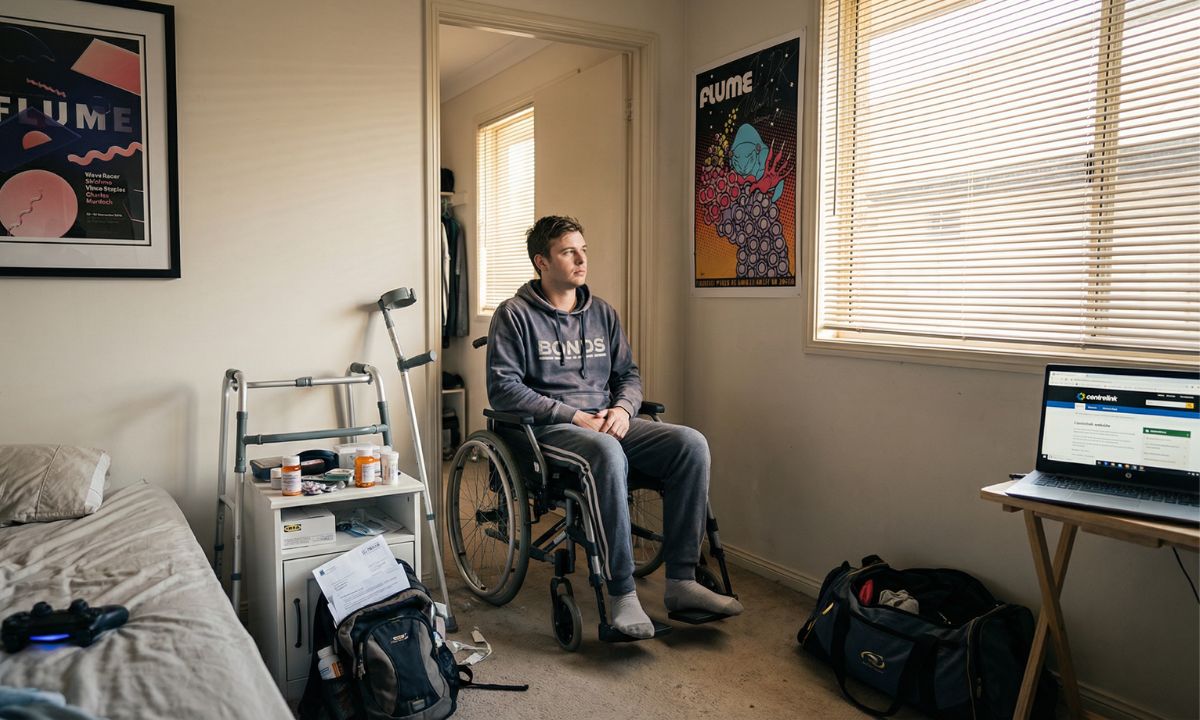
You're 24, and you’ve just finished your trade qualification you've been working towards since high school. Then, before you know it, an accident changes everything.
When injury strikes in your twenties, not only do you have to deal with physical recovery, but you also have to completely rethink your career and get to grips with any new financial pressures. This isn't the same as injury at 50 or 60. The challenges are different, and the support systems don't always recognise that.
Why This Age Changes Everything
Early adulthood is when identity solidifies, and you gain a sense of independence. Serious injury, however, forces you to restart under completely different conditions.
Someone injured at 55 has already established their career, likely accumulated some assets and has different recovery expectations. But in your twenties? You're looking at potentially 50 years ahead with altered capacity and limited work history to calculate earning potential.
There's also the sympathy gap. Older adults with disabilities often receive understanding and support, while young people frequently face scepticism or unhelpful optimism. Neither response acknowledges the genuine disruption you're experiencing.
In 2018, 7.2% of Australians aged 25-34 had a disability. This increased to 10.3% in 2022. Young adults are experiencing increasingly complex, multifaceted disabilities at a time when they're supposed to be building a life for themselves.
Career Plans and Lost Income
Labour force participation among people with disabilities was 53% in 2018, compared to 84% among those without. Those aged 15-24 with a disability were as likely to be in the labour force (52%) as those aged 15-64 with a disability (54%). However, the same young people were less likely to be in the workforce than their peers without a disability (72%).
But these numbers don't capture what it actually means to have your career derailed before it properly started. That’s because you're losing the foundational years that determine everything that follows. It’s the apprenticeship you can't finish or the degree halfway completed.
For many young people, a career is a form of identity. When injury makes that impossible, you can feel undefined, not just unemployed.
There is the option for vocational rehabilitation, but you need to understand your actual capabilities, identify suitable careers, access retraining programs, build new skills while managing medical treatment and enter a new field at entry level when your peers are progressing in theirs.
Who Am I Now? Identity Beyond the Injury
Your early twenties are when you're solidifying who you are. Serious injury can feel like someone else is now defining you. You become ‘the person who had the accident’ before you've even finished becoming whoever you were going to be.

Social media also makes this harder. Your feed is full of friends hitting milestones like promotions, engagements, overseas trips or house purchases. Meanwhile, you're celebrating smaller victories like managing to shower independently or getting through a social event without exhausting yourself.
You're now building a new identity that incorporates your injury without being consumed by it. This is practical identity work, as you’re trying to figure out what values and interests remain unchanged or what new capabilities you’ve discovered.
Peer support groups can be invaluable. Not because misery loves company, but because they understand the work of rebuilding identity from the ground up. Mental health support from psychologists experienced with disability adjustment is equally as important.
The Loneliness Factor
Your friends are at the pub, but you're dealing with chronic pain that makes loud environments unbearable. They're planning a hiking trip, but you can't manage the physical demand. They're staying out until 2 am, but you're exhausted by 9 pm because everything takes more energy now.
Slowly, the invitations decrease because your friends are busy living the lives you were all supposed to live together. Friendships in your twenties are often activity-based, so when you can't participate in the activities that bonded you, what's left?
Building connection requires intentional effort. Seek out peer support communities and communicate with existing friends. You should also try to address mental health early, as depression and anxiety compound isolation.
Financial Reality
The maximum disability support benefit for a single person in Australia is $1178.70 per fortnight for those who are 21 years or older. The national minimum wage is $948 per week or $1896 per fortnight. There’s a substantial difference between the disability support benefit and what a person earns over the course of two weeks.
Young adults with serious injuries face a financial predicament. You’re unlikely to have substantial savings as of yet and you probably don’t own property. Now, your earning capacity is permanently reduced or eliminated.
Right after injury, expenses mount quickly as you have medical treatment, rehabilitation, medications, home modifications, assistive technology and transport. Meanwhile, income drops or disappears entirely.
The bigger challenge is planning for the decades ahead. Someone injured at 60 might need 20-30 years of financial support. At 25, you're looking at 50+ years of lifetime medical costs, no ability to build wealth through career progression, limited capacity to purchase property and potential inability to support yourself in older age.
Understanding Available Support
- TPD (Total and Permanent Disability) Insurance: If you have TPD cover through superannuation, it provides a lump sum if you're permanently unable to work. For young people, claims can be complex because you're establishing what you would have earned with limited work history.
- NDIS (National Disability Insurance Scheme): Provides funding for disability-related supports, including equipment, therapies, home modifications and support workers. Eligibility is based on the permanence and impact of your disability, not age or assets.
- Disability Support Pension (DSP): Government income support for people with permanent disabilities that prevent work. Eligibility criteria are strict, and payment is modest.
- Workers' Compensation: If your injury occurred at work, workers' compensation may cover medical costs and provide income support.
Financial planning after serious injury is about sustainability. Document everything for claims, understand your baseline income and expenses, seek specialised financial advice and think in phases, as your needs will change over decades.
Also read: A Safety Guide For Young Workers In Trade
Getting Help: What's Available (And How to Access It)
The Australian support system exists, but it's often confusing.
Medical and Rehabilitation Support
Your GP is your starting point for referrals to specialists, allied health and mental health services. Allied health professionals, physiotherapists, occupational therapists and psychologists provide rehabilitation and management support. For those under 25, Headspace offers youth-focused mental health services.
Financial Support Systems
For NDIS, you apply directly to the scheme. Approval requires evidence that your disability is permanent and significantly affects daily functioning. DSP is administered through Centrelink and requires medical evidence confirming you can't work 15 hours per week.
Community and Peer Support
Peer support groups, disability sports organisations like Sports Connect Queensland and online communities provide both practical advice and social connection when you're feeling isolated.
Navigating the System
Accessing support requires significant effort at a time when you're least equipped to provide it.
Practical tips:
- Document everything: medical records, appointment notes and test results.
- Ask for help from social workers and care coordinators.
- Understand timelines, as NDIS planning takes months and TPD claims can take a year or more.
- Appeal if denied, as initial denials are common.
- Seek legal advice for complex claims, particularly TPD claims with limited work history.
Your First Steps Forward
If you're facing serious injury in your twenties, here's where to start:
- Immediate priorities (first few weeks): Focus on medical stabilisation, document everything, understand your insurance coverage, connect with hospital social workers and let close friends and family know what you need.
- Short-term actions (first 3-6 months): Establish ongoing medical care, apply for relevant financial support, connect with a psychologist experienced with disability adjustment, begin documenting your pre-injury career trajectory and research peer support groups.
- Ongoing work (beyond 6 months): Engage consistently with rehabilitation, explore vocational options when ready, build sustainable social connections, plan financially for the long term and seek legal advice about TPD claims if relevant.
Don't do this alone. Whether that's family, friends, medical professionals, peer support or legal assistance, trying to do this by yourself makes everything harder.
Building a Different Future
A serious injury before 30 derails the life you were building and there's no pretending otherwise. You'll face challenges your peers won't understand and you’ll have to rebuild identity, career, social connection and financial stability from a position you never expected to be in.
But thousands of young Australians also have these same challenges. Support systems for serious injury exist, even if they're imperfect and hard to access. Recovery, while different from what you imagined, is possible. The life you build won't be the one you planned, but with the right support, it can still be meaningful.
To enquire about TPD claims, you can contact Smith's Lawyers online or call 1800 960 482. We work on a No Win, No Fee, No Catch® basis, meaning you won't pay fees unless your claim succeeds. In 30 years, we've never had a single client out of pocket.