Modern cars are engineering marvels, especially when it comes to safety features.
Things like autonomous emergency braking that reacts faster than any human, lane-keep assist that nudges you back into place if you drift, blind-spot monitoring, curtain airbags, meticulously designed crumple zones and pedestrian detection systems that can stop a two-tonne truck before it hits someone crossing the road.
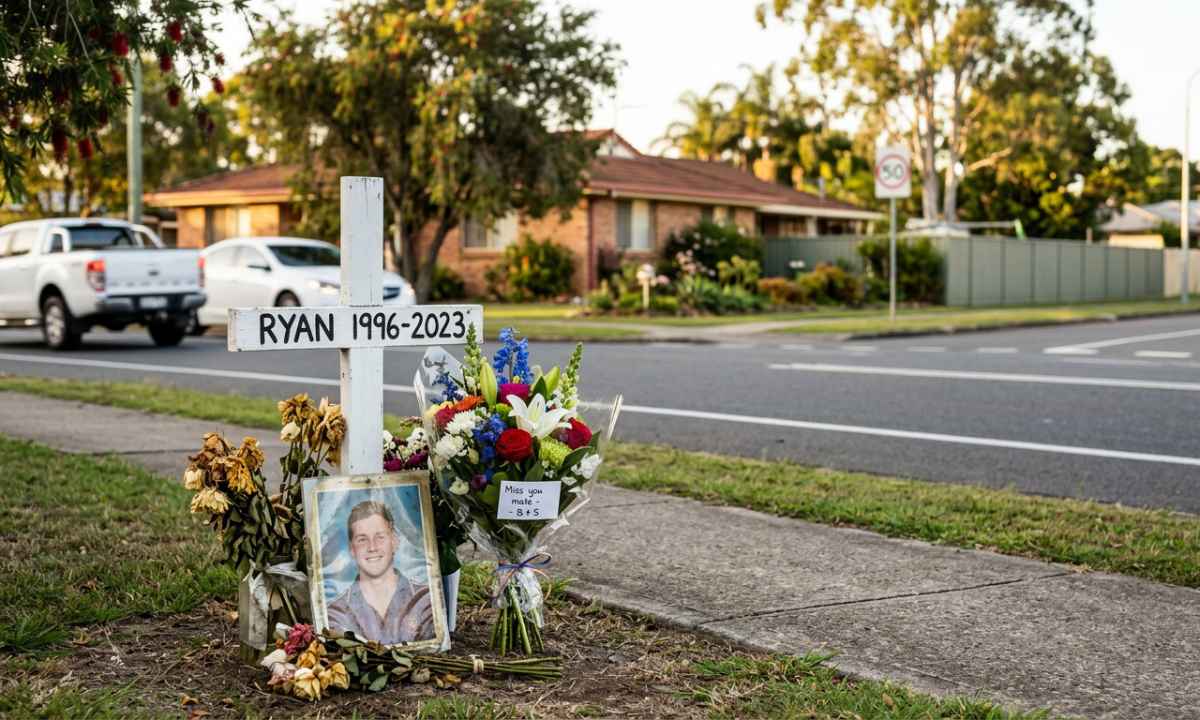
The vehicles we drive today are safer than they’ve ever been, but Australia's death toll on the road has risen for five years in a row.
In 2025, 1,314 people died on Australian roads, up from 1,292 in 2024, a continuous increase not seen since 1952. So, how can the cars be getting safer while roads get deadlier and deadlier?
Let’s take a closer look.
The Numbers Don't Lie (But They Do Complicate Things)
According to raw data from the National Road Safety Data Hub, which tracks every road death in Australia, 1,340 people died in the 12 months leading to mid 2025, a 15-year high that’s roughly 2.9% larger than the previous year.
For context, Australia's road death toll peaked in 1970 with 3,708 deaths, before the introduction of seatbelt laws, random breath testing, speed cameras and improved vehicle safety brought that number down by about 71%.
This marked one of the greatest public health achievements of the 20th century, but that decades-long decline has stalled and even begun to reverse. We are now five years into a National Road Safety Strategy that aims to cut road deaths in half by 2030, but fatalities are actually 19.8% higher than they were when the strategy launched.
Australia also committed to "Vision Zero," an initiative to reduce road deaths to zero by 2050; however, according to researchers at UNSW, current trends make that target essentially impossible to achieve.
It's Not the Cars, it's Everything Else
Things start to become a little clearer when you stop looking at the vehicles and start looking at the systems.
Vehicle safety technology does precisely what it's designed to do. Cars with autonomous emergency braking are involved in fewer front-on collisions. Electronic stability controls make it less likely they roll. Better crumple zones mean there are fewer fatal injuries at any given speed.
The problem is that the things around the vehicle are changing too, and, unfortunately, not for the better.
We're Driving Bigger Vehicles
Australia has had a love affair with large, heavy vehicles like SUVs and utes for years, and while these are safer for the people inside them, they are significantly more dangerous for everyone else.
If a pedestrian is hit by an SUV, they are far more likely to suffer a serious head and chest injury than if they’re hit by a sedan going the same speed. This is because these types of vehicles have higher bonnet lines, so the point of impact is the torso and head rather than the legs. This also applies to cyclists.
This is a fleet-level problem; individual SUV drivers are safer, but the road system as a whole isn’t.
Vulnerable Road Users Are Dying at Higher Rates
This is where the numbers start getting uncomfortable.
Deaths among vulnerable road users like pedestrians, cyclists and motorcyclists climbed by 4.7% in 2025, with 512 fatalities. Within that category, pedestrian deaths rose 13.2% and cyclist deaths grew 32.4%.
The majority of vehicle safety technology is designed to protect people inside the vehicle. Lane-keep assist won't help a cyclist who gets left-hooked at an intersection, and curtain airbags don't protect pedestrians. Safety improvements shift the risk to those outside vehicles.
Drug Driving Has Overtaken Drink Driving
Road deaths involving drivers with drugs in their system have been steadily climbing.
Queensland data shows that drug-driving deaths have now exceeded those involving drunk-driving. This a profound shift that existing enforcement hasn't been able to keep up with because roadside drug testing is more expensive and less widespread than breath testing, and the range of substances detected is far broader than just alcohol.
No safety system will save you from a driver who is genuinely impaired by illegal drugs.
Also read: Why Drug Driving Now Kills More Queenslanders Than Drink Driving - And What Actually Works
Unlicensed and Disengaged Drivers
Fatal crashes involving drivers without a valid licence leapt from 96 deaths in 2019 to 128 in 2021. These are drivers who, by definition, exist outside the licensing system, which means they don’t have proper training, haven't passed their tests and are likely to be driving vehicles without the latest safety features.
This is a demographic that no vehicle technology can reach because the problem isn't the car, it's the driver who shouldn't be behind the wheel in the first place.
The Speed Paradox
A surprising fact is that fatal crashes in 50km/h zones had the greatest increase in the most recent data, with a 16.8% rise in deaths. These are suburban streets where people live, walk, cycle and let their kids play.
At the same time, single-vehicle crashes, which often involve inattention, fatigue or impairment, grew from 624 to 680 fatal incidents.
These aren't high-speed crashes on the highway, they're incidents on ordinary roads, at ordinary speeds, in which something goes terribly wrong.
The Distraction Elephant in the Room
One factor that’s seen across every category of road death is distracted driving and mobile phone usage.
The advent of smartphones has fundamentally changed the way people behave behind the wheel. Checking a notification, glancing at a map and reading a text are all constant temptations, and the consequences are severe.
A driver looking at their phone for just two seconds at 60km/h goes more than 33 metres while effectively blind.
Queensland has responded with AI-powered cameras that can detect phone use, and steep penalties: $1,209 and four demerit points. But this behaviour persists because the technology is addictive by design.
Vehicle safety systems can make up for part of this. Autonomous emergency braking might prevent a collision you didn't see coming because you were looking at your phone, and lane-keep assist might save you from drifting, but these are reactive safety nets not fool-proof solutions.
The Safety Technology Comfort Trap
There's a well-documented psychological phenomenon called "risk compensation," which is the idea that when people feel safer, they take more risks.
When seatbelts were first introduced, they were associated with a small increase in risk-taking behaviour amongst drivers. Some researchers believe the same thing is now happening with advanced driver-assistance systems.
When a car has autonomous braking, lane-keep assist and adaptive cruise control, it's tempting for drivers to pay less attention because they rely on the car to save them.
Unfortunately, this isn’t always true. These systems work in specific conditions and at specific speeds, which means they have specific limitations.
A forward-facing camera can't see a child running out from behind a parked car, radar-based cruise control can struggle in heavy rain and none of these systems are designed to operate a vehicle while the driver checks Instagram.
Where Does This Leave Us?
The honest answer is that vehicle safety technology has now reached a point of diminishing returns. This isn’t because the technology isn't amazing (it is), but because the biggest risks aren't technological, they’re human: distraction, impairment, speeding on suburban streets, driving without a licence and choosing a bigger vehicle that protects you but endangers everyone else.
The Bureau of Infrastructure, Transport and Regional Economics puts it plainly: for the foreseeable future, human drivers will continue to be the primary operators of vehicles, which means human factors will remain the biggest contributor to road deaths.
Developers of car safety technology have done their part, the question is whether we're going to do ours.
That means putting the phone down, not driving while impaired and respecting the speed limit on suburban streets. A five-star safety rating doesn't make you invincible, it just means the engineers have done everything they can.
The rest is up to us.