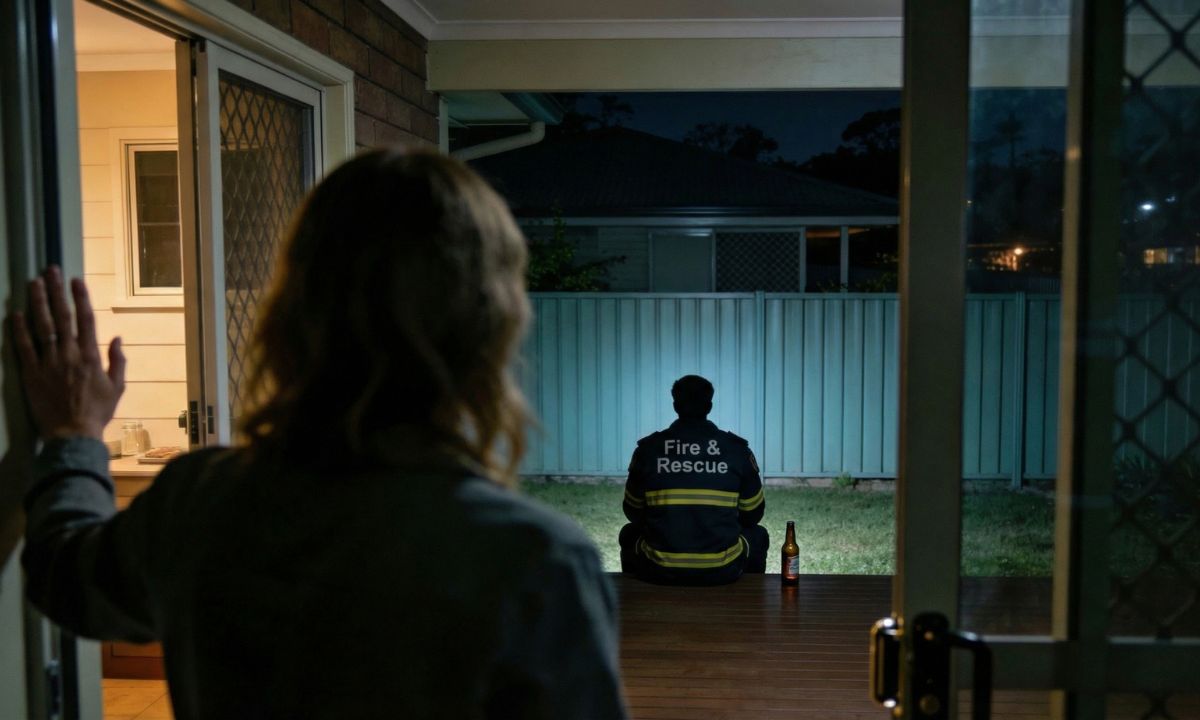
A Queensland paramedic attends her 50th fatal crash in five years, then somehow manages to push through another shift without a pause. A Brisbane police officer bottles up the aftermath of a violent assault, only seeking help when his marriage begins to crumble. A Gold Coast firefighter witnesses her 30th traumatic death and wonders why sleep no longer comes easily.
There’s a hidden pattern behind Queensland's emergency services, a cumulative mental health toll that our workers' compensation and Work Health and Safety systems were never designed to catch.
While we build frameworks for single workplace injuries, first responders are carrying a different kind of injury. This is one that compounds with every critical call, every death scene and every moment of horror absorbed, so the rest of us don't have to.
This is the PTSD we don't count, and it's time we changed that.
The Numbers We're Only Just Starting to See
Australian first responders face mental health problems at twice the rate of the general population, with around one in ten of Australia's emergency workers and volunteers developing PTSD from critical incidents. That figure will climb higher when you include retirees who left their service jobs.
For most Australians, PTSD follows a single horrific event, such as a car accident, an assault or a natural disaster. The trauma is unexpected and singular. For first responders, trauma arrives in routine doses. Fatal crashes blend into medical emergencies, blend into violent confrontations, blend into suicide scenes, and your brain doesn't reset between calls.
Research shows this cumulative exposure creates sensitisation. Each traumatic event amplifies your response to the next one. What you could shake off in year two might shatter you in year ten. The anger and guilt that surface aren't the fear responses civilians experience. They're the emotional signature of prolonged exposure to other people's worst days.
A typical career trajectory? Try 100-plus critical incidents for a Queensland paramedic. Twenty to thirty traumatic deaths for a firefighter over 20 years. Countless violent encounters for police officers. Then, for emergency call-takers absorbing horrific details second-hand, shift after shift, their trauma is considered less ‘real’ because they weren't physically present.
Why Help Comes Too Late
As we all know, the culture is usually to toughen up and simply push through, so your crew doesn’t see your weakness. But that same resilience that makes you brilliant at saving lives becomes the barrier stopping you from saving your own.
If you're experiencing PTSD symptoms but fear career repercussions, you'll hide them until hiding becomes impossible. Maybe your partner notices the hypervigilance first, the way you scan every room, startle at loud noises, can't relax even at home. Maybe your kids start tiptoeing around your anger. Maybe you miss work one day, then three, then six months.
Michael Willing, CEO of Fortem Australia, frames it differently: "We also need to create a culture where mental health is treated as an essential component of overall wellbeing. This means fostering an environment where being mentally healthy is seen as a life-long journey and seeking help is seen not as a weakness, but rather as a strength."
However, cultural changes take time, and Queensland's first responders are paying the price in the meantime.
The warning signs are there early if you know where to look. They come in the form of chronic sleep problems after repeated exposures, irritability that doesn't match the trigger, withdrawing from social connections, and that constant vigilance you can't switch off. These are your brain’s way of reacting to cumulative trauma and the way a body reacts to repeated physical strain.
Many wait until families unravel or until what could have been treated becomes the reason they can't work at all.
Also read: PTSD: Post Traumatic Stress - A Partner's Survival Guide
Mapping the Journey Nobody Warns You About
The path from ‘I've got this’ to ‘I can't do this anymore’ follows a pattern you'll recognise if you've lived it or watched someone you love disappear into it.
Phase 1: The Cumulative Build
You keep showing up, handling calls, getting the job done, but after dozens of exposures to death or violence, sleep gets harder, and you can’t switch off. Hypervigilance feels like being switched on at first, but then your brain rewires itself to stay in threat mode.
Phase 2: The Tipping Point
Then one call tips you over, a child, a familiar crash, or simply the straw that breaks years of accumulated load. Anger spikes, substance use creeps in, you start avoiding reminders, and sometimes a super fund is suddenly asking if you’re ‘totally and permanently disabled.’
Phase 3–4: The Fitness Trap and Home Ripple
Pressure to return before you’re ready can become its own trauma, especially when assessments focus on short‑term fitness, not long‑term damage. Meanwhile, families absorb the fallout, where living with your hypervigilance, emotional distance and sudden anger means they create their own secondary trauma as they watch you slowly disappear behind the uniform.
What the System Gets Right (and What It Misses)
Queensland’s PTSD laws for police, firefighters and ambulance officers have made it easier to access compensation by removing the need to prove causation after certain traumatic events. They work best for sudden, single‑incident trauma but struggle with cumulative PTSD that builds over many exposures.
Even when treatment is covered, many workers are still forced out of their roles, with only superannuation TPD available if they meet strict definitions. First responders with PTSD symptoms may never claim at all due to stigma and a sense that it’s ‘part of the job,’ leaving a gap between what science says is needed and how systems actually respond.
Taking Back Control: A Practical Guide for Recognition, Documentation and Recovery
You can't change the system overnight, but you can start protecting yourself today. Whether you're the first responder, the partner or the colleague noticing the signs, these steps matter.
Spotting the Signs Early
PTSD doesn't always announce itself with flashbacks and nightmares, though those happen. Watch for the quieter markers:
In yourself:
- Hypervigilance that won't switch off, even at home
- Sleep disruption beyond typical shift-work fatigue
- Irritability or anger out of proportion to triggers
- Withdrawing from people and activities you used to enjoy
- Intrusive memories of traumatic calls
- Active avoidance of reminders (routes, situations, conversations)
- Difficulty concentrating or making decisions
- Feeling emotionally numb or detached
Family flags to watch for:
- Increased irritability immediately after shifts
- Startle responses to ordinary household noises
- Emotional withdrawal from family activities
- Changes in alcohol or substance use patterns
- Sleep disturbances affecting the whole household
Start a simple journal and track any changes with critical incidents. Note your immediate emotional response and flag any symptom changes. It sounds clinical, but it creates a record for your own awareness and for claims documentation if you need it.
The Black Dog Institute offers free online self-assessments specifically designed for emergency workers. Take one. Share it with your GP. Early detection changes outcomes.
Building Your Documentation
If symptoms persist beyond a few weeks, documentation becomes crucial. Not just for potential claims, but for tracking your own patterns and recovery needs.
Create a chronological exposure log:
- Date and brief description of each critical incident
- Your immediate emotional response
- Any symptom changes in the days following
- Impact on work, relationships or daily functioning
Keep it factual, not dramatic. ‘Attended fatal crash involving children, experienced difficulty sleeping for three nights, irritable with partner’ is more useful than ‘terrible day.’
Secure GP and psychologist records from the start:
- See your GP within days of recognising persistent symptoms
- Request a mental health care plan for access to psychology sessions
- Maintain regular appointments even if progress feels slow
- Keep copies of all reports, assessments and treatment notes
Document family impacts:
- Note when partners or children mention behaviour changes
- Track how symptoms affect home life, not just work
- Record any relationship strain or parenting difficulties
This is protecting yourself in a system that requires evidence for cumulative trauma claims. The difference between ‘I've been struggling’ and ‘Here are 18 months of documented exposures and symptoms’ can determine whether your claim succeeds.
Recovery Strategies That Work
Evidence-based treatment for first responder PTSD centres on trauma-focused therapies. Research reveals that trauma-focused cognitive behavioural therapy (TF-CBT) and Eye Movement Desensitisation and Reprocessing (EMDR) achieve 80% recovery rates when delivered properly.
That means 8-12 sessions minimum, 60-90 minutes each, with a psychologist trained in these specific modalities. For severe or cumulative cases, you should expect more. Don’t see this as weakness, instead, look at it as reprocessing traumatic memories so they stop hijacking your nervous system.
Daily practices to support recovery:
The 10-minute post-shift reset: Before you walk through your front door, sit in your car. Breathe slowly and inhale for four counts, hold for four, exhale for four. Visualise leaving work stress in the vehicle, not carrying it inside. It might be simple, but it reduces arousal symptoms when done consistently.
Weekly family buffers: Designate no-work zones. One dinner per week where job talk is off-limits. One activity where phones are away, and presence is the goal. Protects relationships from constant trauma spillover.
Peer connection: This matters more than you'd think. Queensland first responders can access support through Fortem Australia, Beyond Blue's first responder line (1300 366 634), or the Black Dog Institute's programs, including NEWSS (National Emergency Worker Support Service). Talking to people who get it reduces isolation and provides practical coping strategies.
Navigating the Support Maze
For immediate support:
- Beyond Blue First Responder Support Line: 1300 22 4636
- Lifeline: 13 11 14
- Your workplace Employee Assistance Program
For treatment:
- GP referral for Mental Health Care Plan
- Request psychologists trained in TF-CBT or EMDR specifically
- Ask about first responder experience, as general trauma therapists may miss nuances
For claims and financial questions:
- Workers' compensation: Document everything, seek help early
- TPD through superannuation: Check your policy definition (‘own occupation’ vs ‘any occupation’), understand that psychological claims require consistent treatment records and often independent medical assessments
- Remember, specialist advice matters in these situations
One practical hurdle most people hit: Starting feels impossible when you're exhausted and symptomatic. So start with one thing. One log entry today. One phone call this week. One conversation with your GP. Small actions break the paralysis that keeps you stuck.
Learn about 5 Free Apps to Help with Anxiety and Post-Traumatic Stress (PTSD)
Where We Go From Here
Queensland’s systems for first responders are improving but still lag behind the reality of cumulative trauma. Presumptive laws and better treatment guidelines help, yet many workers can’t wait for perfect policy and need practical support now. PTSD symptoms like anger, hypervigilance, insomnia and numbness are normal responses to repeated trauma, not personal weakness, and loved ones can experience real secondary trauma too.
Those in power need to listen to frontline experiences and data showing that current frameworks miss people affected by long‑term exposure. For individuals, small steps, logging shifts and symptoms, seeing a GP, calling a helpline, talking honestly with partners or colleagues are immediate ways to start turning that cumulative load toward recovery.
For TPD claims enquiries: If you're considering a TPD claim and need specialist guidance, you can enquire online or call 1800 960 482. Smith's Lawyers operates on a No Win, No Fee, No Catch® basis. Our guarantee: In the unlikely event your case goes to court, and you're unsuccessful, we'll cover the costs, so you won't pay a cent to us or anyone else. In 30 years, we've never had a single client out of pocket.