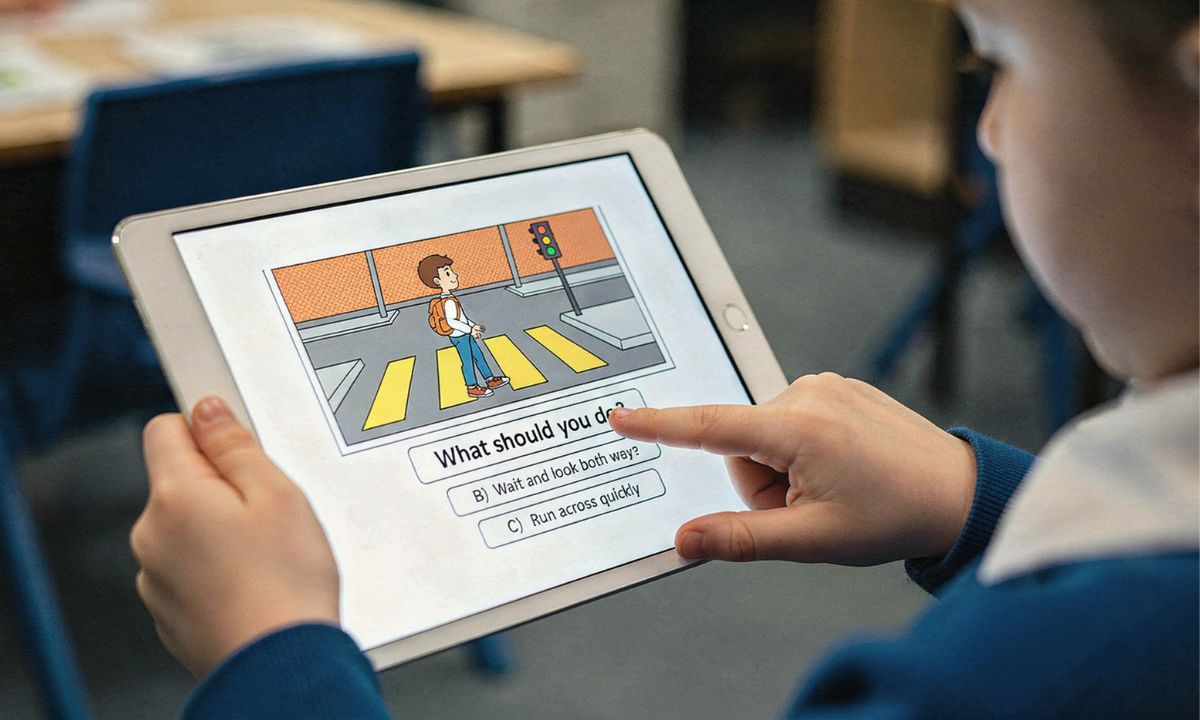
Let’s face it, this generation of children is whizzes when it comes to anything digital. After all, these are essential skills for any modern individual. But how digitalised is children’s road safety training? Take a look inside the classroom and things still seem fairly analogue: learning materials, safety posters, slides.
State governments throughout Australia have realised this and have a new approach: gamified road safety programs that meet kids where they already are, in interactive digital environments.
The stakes couldn't be higher. Road trauma remains the leading cause of death for Australian children aged 1–14 years, and transport-related injuries are the second leading cause of death for young adults aged 15–24. With children and young adults representing approximately 24% of lives lost on Australian roads, there's an urgent need for a system of road safety education that works.
Queensland and other states are rolling out interactive programs like Journi and Road Smart Kickstart to state schools. These are fun, graphic novel-style adventures and scenario-based decision-making games designed to rethink road safety.
But here's the question nobody's quite answered yet: are these programs genuinely changing the way young Australians make decisions on the road, or are they just a more engaging way to deliver the same old message? This article will try to answer this by looking at the rollout of such programs, their effectiveness, as well as a few teething issues.
Understanding the Psychology
According to Queensland's Road Safety Education Blueprint, road safety education is crucial in establishing children's attitudes, perceptions and behaviours that lead to responsible pedestrians, cyclists, drivers, and passengers.’ So, yes, the need is clear, but the how, maybe not so much, especially as educational habits shift over time.
Gamification is all about applying what makes games engaging: immediate feedback, meaningful choices, and real consequences.
Think about how kids learn to avoid their character from being injured in, let’s say, an RPG game. They try something, see what happens, and adjust their strategy instantly. When a character ignores a warning sign, the consequences are immediate and memorable: ‘Game Over’. That's fundamentally different from listening to someone lecture about looking both ways.
The psychological principle is simple: active decision-making creates stronger neural pathways than passive observation. When a Year 6 student navigates their digital character through a busy intersection and must choose whether to check their phone or watch for speeding cars, they're practising decision-making, not just being lectured to.
Inside Australia's Leading Programs
Journi: The Graphic Novel Approach
Journi launched in February 2025 as Queensland's answer to engaging 10–12-year-olds in road safety. Developed by the Department of Transport and Main Roads in partnership with the Australian Road Safety Foundation, it's now being rolled out to all state primary schools in Queensland at no cost to users.
What makes Journi different is its graphic novel format combined with interactive decision points. Instead of watching boring safety scenarios unfold, Year 5 and 6 students guide characters through realistic situations, such as crossing busy streets, riding bikes on shared paths, and even dealing with mobile phone distractions.
The program covers everything from traditional concerns like seatbelts and pedestrian visibility to contemporary issues like e-scooter rules and Queensland's minimum age requirements. It's also designed to address regional safety challenges, acknowledging that rural road environments present different hazards than city streets.
Four flexible modules let teachers tailor content to their classroom needs. Supporting offline resources include lesson plans and student activities aligned with the Australian Curriculum Version 9. What’s more, the Australian Road Safety Foundation provides webinars, school visits, and ongoing support.
The advantage of a graphic novel? Visual storytelling creates emotional investment. When students care about what happens to the characters they're guiding, they're more likely to transfer those lessons to their own behaviour.
Road Smart Kickstart: Targeting Regional Risk
Western Australia took a different approach with Road Smart Kickstart, specifically targeting Years 7–8 students in regional areas where 60% of road fatalities occur.
The program uses gamified learning stations delivered directly to schools by the Road Safety Commission's education team. Schools can choose between 55-minute and 110-minute sessions, providing flexibility for different timetables.
This program targets the transition period just before young people start thinking seriously about driving. As WA's Police and Road Safety Minister noted, ‘by the time they begin thinking about getting a driver's licence, many young people have already, often unknowingly, been shaped by the behaviours and attitudes they've observed in others, particularly around speeding, distractions, seatbelt use, and peer pressure.’
In 2025 alone, 1,414 young people across regional schools in WA have booked sessions. Schools can also access $500 ‘Power Up’ grants for small safety initiatives and $5,000 ‘Change Master’ grants for more comprehensive programs.
Beyond Textbooks: Changing the Game
Traditional road safety education typically follows a predictable pattern: the teacher presents information, students watch a video, perhaps complete a worksheet, and move on. The problem isn't that the information is wrong; it's that it doesn't engage the decision-making parts of students' brains that will matter when they think about crossing the street while texting or wearing a helmet.
Interactive platforms shift the learning experience in several important ways:
1. Immediate consequences make abstract risks seem real. When a student's character gets distracted by their phone while crossing, they see the near-miss immediately. That emotional response creates a stronger memory.
2. Personalised pacing respects different learning speeds. Some students grasp safety concepts more quickly than others. Digital platforms can adapt, letting faster learners progress while giving others more time if required.
3. Emotional engagement drives retention. When you're invested in a character's well-being, the lesson sticks. It's why we remember stories long after we've forgotten facts.
4. Different learning styles are supported by the shift from passive observation to active participation. Visual learners engage with graphic elements, kinaesthetic learners benefit from interactive decision-making, and reading-focused learners can explore supplementary materials.
The Elephant in the Room: Does It Actually Work?
By all accounts, these programs are engaging, students enjoy them, teachers report higher participation than in traditional safety lessons, and governments are investing in widespread rollout. But does any of that translate to fewer young people getting hurt or killed on Australian roads?
The honest answer is: we don't know yet.
The programs are relatively new, and measuring real-world safety outcomes with accurate data takes years. You can't simply compare crash rates before and after a program launches. Countless other factors influence road safety: changes in traffic enforcement, vehicle safety features, road infrastructure improvements, and even weather patterns.
What we can say is that engagement is a necessary first step. If students aren't paying attention, no learning happens. By that measure, the gamified programs could be considered a success.
But there's a big difference between ‘students enjoyed the program’ and ‘students changed their road behaviour’, and an even bigger gap between changes in behaviour and actual safety outcomes. A student might understand that looking both ways is important, have enjoyed playing the game, and still forget to actually look when rushing to catch the school bus.
What research tells us is that real changes in behaviour require multiple touchpoints over time. A single gamified lesson, no matter how engaging, won't override years of observed behaviour from parents, peers, and the community. These programs work best as part of comprehensive safety strategies.
Getting Programs Into Classrooms
Innovation only matters if it actually reaches students.
The good news is that both major programs are free for schools, removing the most common barrier for many: money. The not-so-simple part is everything else.
.jpg)
The digital divide remains real. Journi's online format requires reliable internet connectivity and access to a device. While most schools in Queensland have adequate technology infrastructure, quality and availability vary significantly. Rural and remote schools, the very communities facing higher road fatality rates, sometimes struggle with connectivity, making internet games like this frustrating.
Even with support webinars and offline lesson plans, implementing a new program requires time, energy, and commitment from teachers. A teacher juggling 30 students, a demanding curriculum, and administrative requirements might find it easier to just skip the new digital program.
Implementation quality matters enormously. A teacher who simply tells students to ‘go do the online modules’ will get very different results from one who integrates the program thoughtfully.
Programs as Part of the Bigger Picture
No program, however well-designed, changes road safety alone.
Queensland positions Journi as part of a whole-of-life approach to road safety education, with different programs targeting different life stages from birth through to age 24. For older students, Journi complements the existing Keys4Life program for learner drivers.
This integration matters because safety behaviour isn't learned in a single lesson. It's built through consistent messaging reinforced across multiple contexts over the years. A student who learns about seatbelt safety through Journi in Year 6, discusses it with parents, sees it modelled by adults, and encounters it again when learning to drive has far better odds of actually buckling up than one who only saw a gamified scenario once.
The most critical influence on young people's road behaviour often isn't what they learned in school; it's what they observe daily from those around them. A parent who speeds, texts while driving, or doesn't use a seatbelt teaches more powerful lessons than any educational program can compete with.
Also read: Global Innovations in Road Safety: Protecting Vulnerable Users
What Parents, Educators, and Advocates Should Consider
As these programs expand across Australia, here's what matters most.
Engagement is necessary but not sufficient. Programs that students enjoy and complete are better than those they ignore. But enjoyment doesn't guarantee changes in behaviour.
Context and implementation quality matter as much as program design. Even brilliantly designed programs deliver limited value if implemented poorly or in isolation from broader safety education.
Parents remain the most powerful influence. No school program can override what young people observe daily. If you want your kids to internalise safety lessons, model safe behaviour consistently, buckle up, put phones away while driving, and follow speed limits.
Keep the conversation about road safety going. When your child completes a module, ask what scenarios they encountered and what decisions they made. Maybe bring up the topic again when out on the roads.
The rise of gamified road safety education represents genuine innovation in how we engage young Australians with critical life skills. Whether these programs fulfil their promise and actually reduce the heartbreaking toll of road trauma remains to be seen. The answer will depend on continued investment, thoughtful implementation that addresses access, and an understanding that no single program replaces comprehensive safety strategies.