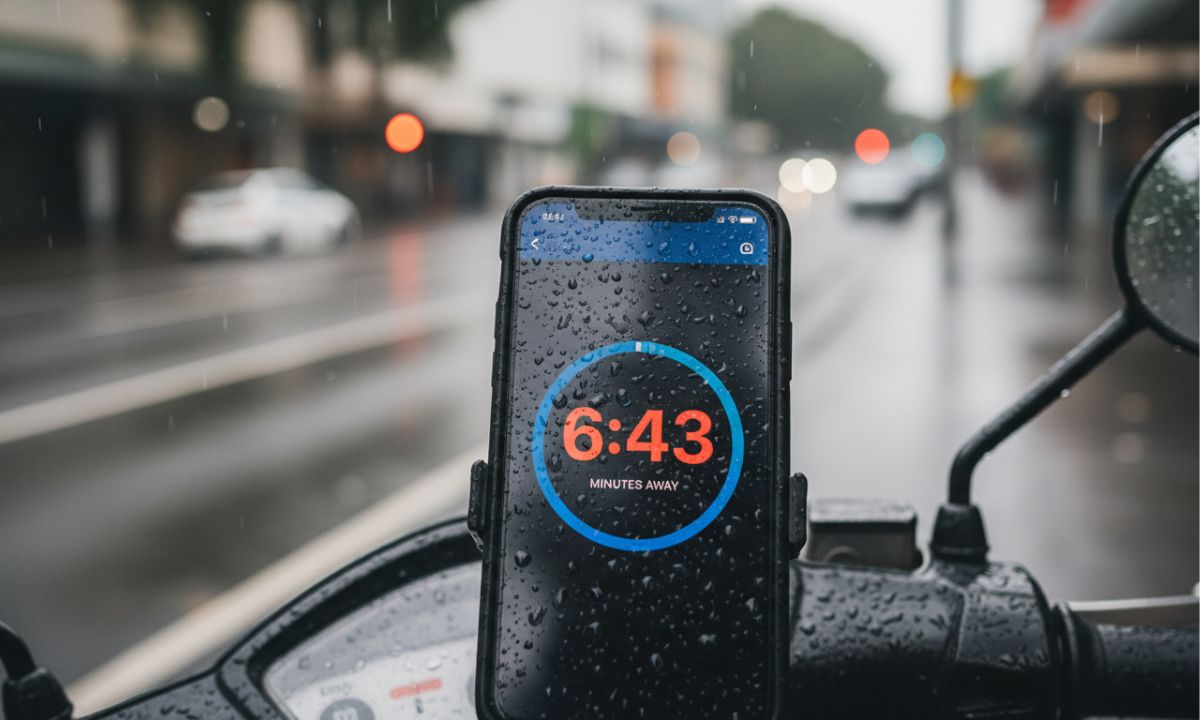
You're halfway through a delivery shift in Brisbane when the app dings. ‘Complete in 8 minutes or risk deactivation.’ The rain's pelting down, the traffic is chaotic, but that timer keeps ticking. Your chest tightens, not from the cold, but from the thought that just one more bad rating could mean a significant reduction in your income.
This is the reality thousands of gig workers across Queensland face every day. The boss isn't a person anymore. It's an algorithm built overseas, designed to squeeze every second of productivity out of you, with the inability to assess whether it is safe to do so or not. And it's causing real injuries: on our roads, in warehouses, and for the mental health of workers globally.
This article will look into the concerns that have arisen with the wider acceptance of the gig economy. We’ll also focus on how injuries that are caused through such ‘gigs’ are harder to prove than they should be, and what you can do about it. Let’s get started.
When Your Performance Is Reviewed After Every Single Job
Ever checked your star rating and felt your stomach drop to see a below-average review? It’s a common feeling for workers in the ‘gig economy’ and part of the psychological grip these apps have on workers.
Platforms, such as Uber Eats and DoorDash, have come under criticism for essentially weaponising the tracking of workers’ performance. After all, low ratings mean fewer job offers or being pushed to the bottom of the priority list. In extreme cases, you're deactivated entirely without warning.
This creates what psychologists call performance anxiety, a constant state of hypervigilance where you're monitoring not just the road, but also every tiny decision you make, or the microaggressions of clients when you’re a few minutes late.
Unlike traditional workplaces, where a manager might cut you some slack on a rough day, algorithms have no empathy. They just have metrics. And when your income depends on maintaining near-perfect scores, you start making dangerous trade-offs.
Queensland's gig economy exploded post-pandemic, with platforms filling gaps left by traditional employment. But this growth came with a hidden cost: workers now carry the psychological burden of constant surveillance, creating stress responses similar to high-stakes emergency work, without any of the support systems that are so vitally needed.
Racing Against the Clock on Roads in Queensland
Food delivery riders and rideshare drivers face dangers that aren’t only traffic-related. They are in a constant battle with countdown timers whose mission is very simple: to minimise delays, no matter what.
Stuck in Gold Coast congestion? Dangerously low visibility as a storm hits? The app doesn’t care. The algorithm factors in ‘average’ conditions and expects you to hit those targets regardless.
This taps into something psychologists call ‘loss aversion’. The pain of losing priority status or being penalised feels more immediate than the risk of a crash. So workers speed. They run yellow lights. They take risks.
Research shows delivery riders report significant pressures that often lead to unsafe practices. These studies document increased collision rates among platform workers in urban areas, for instance. When you're choosing between braking for a pedestrian or keeping your account active, real questions need to be asked.
The scenario plays out daily: you're on a late shift, the app sends a ‘hurry up’ alert, and suddenly that safe following distance feels like a luxury you can't afford. One Brisbane rider put it bluntly: ‘You become more focused on the timer than the road. That's when things go wrong.’
From the Road to the Warehouse: Productivity Over Safety
Shift focus from roads to warehouses, and the pattern is similar, only the injuries are different.
App-based logistics systems track pick rates, how many items you grab per hour, and flag any ‘time theft’ like breaks longer than 90 seconds. The algorithm doesn't care if you're using a proper lifting technique or if a particular box weighs 20 kilos more than the last one. It just sees numbers dropping.
This speed bias fuels a surge in musculoskeletal injuries. Back strains from rushed handling. Shoulder problems from repetitive movements at a pace that is simply unsustainable. Workers in Queensland hubs like Eagle Farm report feeling like the app's watching their every move, creating what experts call ‘surveillance stress’.
Unlike human managers who might notice you're struggling and rotate your tasks, algorithms optimise for output alone. And while worker averages are taken into account, it’s often the case that each person’s unique traits haven’t been programmed in, or ad-hoc situations cannot be properly integrated.
Some have gone as far as to question such workplace instruments on the grounds that rushed work causes more injuries and, from a business perspective, more errors.
The Mental Toll You Can't See in the Mirror
Physical injuries are obvious. The psychological ones are just as real, but often harder to see.
When your income fluctuates wildly based on rating systems and deactivation threats loom constantly, your brain stays in fight-or-flight mode. It's exhausting. Some workers describe it as mimicking PTSD, always waiting for the next alert, the next complaint, the next algorithmic decision that could upend your week.
In a poll of a thousand platform workers in the US, two in five gig economy workers said they had ‘experienced stress caused or made worse by their work in the past year’, with ‘a third complaining of tiredness or exhaustion’. Suffice it to say, it’s the result of a system designed to extract maximum effort with minimum security.
And what about ratings-based pay? One bad day, one unfair customer, one glitch in the system could tip the balance from receiving a comfortable income to fearing you won’t have enough to pay the electricity bill at the end of the month.
This hits hard for young workers, many entering the gig economy for its flexibility. They wanted control over their schedules, but instead they got the expectation they’d be available 24/7, and the algorithm bearing down on them night and day.
It’s important to note that you’re not in the wrong to feel like you’ve been wronged. Many rightly believe that with ratings systems and app time constraints, the cards are stacked against the worker.
The Legal Maze: Who's Responsible When Code Calls the Shots?
Queensland's Work Health and Safety laws are clear: employers must ensure worker safety. But gig platforms insist you're not an employee, you're an ‘independent contractor’. This is where things get complicated.
This distinction matters enormously. It's the difference between comprehensive worker protection and shouldering all the risks yourself.
Yet these apps influence when you work, how quickly tasks are completed, which routes are suggested, and even whether an account remains active. This challenges the idea of full independence. In effect, it is a form of algorithmic management, often designed by overseas tech companies and implemented with limited local oversight.
Australian unions like the Transport Workers Union argue platforms should be treated as employers under workplace health and safety laws, and so the owners should be responsible for managing the risks their systems create. Fair Work has begun scrutinising these arrangements, but the legal picture is still pretty murky.
There's a clash here. Australia's workplace traditions emphasise looking out for your colleagues, providing safe work environments and listening to workers’ concerns. Silicon Valley's algorithmic approach treats workers as data points in an optimisation jigsaw puzzle. Those philosophies don't mix well.
Proving Injury When Your Boss Is a Black Box
If you're injured and need to claim workers' compensation or Total and Permanent Disability (TPD) insurance, you face an uphill battle, essentially trying to prove that the app was the cause.
TPD insurance, usually held through your superannuation fund, provides a lump-sum payment if injury or illness permanently prevents you from working. ‘Own occupation’ policies pay out if you can't return to your specific job, say, as a delivery driver. ‘Any occupation’ policies are stricter, requiring you to be unable to do any work you're suited for by training or experience.
But here's the catch: you need to demonstrate that the work caused the disability. When your employer is a code designed in California, extracting that evidence is tough. Platforms rarely disclose how algorithms make decisions. Was that deactivation because you took safety-appropriate breaks? The system won't tell you.
Sadly, this is deliberate. It shields platforms from accountability while leaving workers scrambling to piece together screenshots and GPS logs to prove their case.
Also read: The Fight for Rights: Food Delivery Riders and the Gig Economy
A Global Problem, Local Consequences
The gig model isn't unique to Australia, but how we're responding is.
In the United States, ‘hustle culture’ dominates. Workers are expected to juggle multiple apps simultaneously, working exhausting hours with minimal regulatory oversight. As a result, injury rates are higher, and legal protections are weaker, with many states classifying gig workers as contractors with limited recourse.
In Australia, unions and advocacy groups are pushing back. The TWU's campaigns for minimum standards and safety protections reflect a cultural expectation that work, any work, should meet basic thresholds. Fair Work's investigations into platform practices show regulatory appetite that's largely absent in the US.
Young workers find themselves caught between these models. They value the flexibility gig work promises, but increasingly recognise the psychological and physical costs. Gen Z might have entered this economy seeking autonomy, but they're discovering algorithmic control is just as stifling as traditional management, and more dangerous.
The challenge is balancing innovation with protection. Nobody wants to kill the flexibility that genuinely benefits workers. But when algorithms prioritise profits over people's safety, regulation is overdue.
Also read: What Rights Do Workers in the ‘Gig’ Economy Have?
Pushing Back: What You Can Do Right Now
You're not powerless against these systems. Let’s look at how documentation can be your strongest weapon.
Screenshot everything. Capture those countdown timers, the ‘hurry up’ alerts, the deactivation threats. Record timestamps showing when unsafe demands were made during rain, traffic, or fatigue.
Log near-misses. Every time you almost hit something because you were racing the clock, write it down. These incidents can show a pattern that helps prove the app's pressures create hazards.
Report to unions. Organisations like the Transport Workers Union Queensland offer support for gig workers documenting unsafe practices. Collective reporting strengthens everyone's case.
Use feedback loops. Most apps have spaces where you can report. Flag every instance where meeting targets would require unsafe actions. Make the platform's own records reflect their demands.
Contact WorkSafe Queensland. They provide free advice on work health and safety issues, including algorithmic management risks. Call 1800 011 308 to discuss your situation.
Breaking the cycle means prioritising safety over ratings. Yes, that might cost you in the short term. But one serious injury costs far more, in pain, lost income, and recovery time.
If You've Already Been Injured: Protect Your Rights
The moment an injury occurs, whether physical or psychological, get logging.
For physical injuries: Log app data immediately. Your ratings history, the timers active when you crashed, and the GPS showing route pressures all prove the connection to the algorithm. Take photos of injuries and the scene of the accident.
For psychological claims: Track every GP visit where you discuss work-related anxiety, burnout, or stress. Medical records linking your mental health struggles to platform surveillance strengthen compensation claims.
Check your TPD cover. Most Australians have TPD insurance through their superannuation, often without realising it. If injuries permanently prevent you from working, say, chronic back problems, you may qualify for a lump-sum payment. Be aware that policies typically have waiting periods of three to six months before claims can be assessed.
Seek guidance early. Contact your super fund about TPD provisions. Reach out to unions for claims support. Report to WorkSafe to establish the injury's work-related nature.
Don't assume you're not covered because you're a contractor. The classification might be challenged, and even if it stands, insurance pathways exist. But only if you document thoroughly and act promptly.
Resources to Know and Use
WorkSafe Queensland: Report WHS breaches and get free safety advice. Phone: 1800 011 308. They can assess whether platform practices violate duty of care obligations, even for contractors.
Transport Workers Union Queensland: Dedicated gig worker support, including fatigue reporting systems and advocacy for better conditions. They're running active campaigns around all of these issues workers are facing.
Your Super Fund: Check your policy documents or member portal for TPD coverage details. Understand your definition (own vs. any occupation) and waiting periods before you need to claim.
In-app safety features: Some platforms offer crash detection or emergency buttons. These tools can connect you quickly to support after incidents. Activate them if available.
The important takeaway: you’re not alone, and resources exist to help you. Make use of them if you can.
When Efficiency Becomes Exploitation
The algorithm isn't inherently evil, nor has it been designed to be so. It's code optimising for specific goals. The problem is that those goals prioritise things such as delivery times or packages processed over human well-being.
We're witnessing a fundamental shift in how work is managed, with workers throughout Queensland on the frontline of this experiment. The promise was flexibility and opportunity. The reality for too many is speed-induced injuries, psychological strain, and legal confusion when things go wrong.
Technology should make work safer, not more dangerous. Algorithms could factor in weather, fatigue, and traffic to set realistic expectations. Platforms could provide transparent appeals when ratings drop unfairly. Systems could be designed with worker welfare as a metric that matters, not as a secondary consideration.
Until that happens, your best protection is knowledge. Know the pressures aren't in your head; they're engineered into the system. Know that unsafe demands are workplace health and safety violations, contractor status or not. Know that injuries caused by algorithmic pressure are compensable if properly documented.
Stay alert. Stay safe. Document everything. And never let an app convince you its timer is worth more than your well-being.