In 2024, 72 people died on Australian farms, and there were a further 133 non‑fatal injuries on top of that. That's more than double the national death toll from 2023, making it the deadliest year on farms in more than two decades.
Queensland saw 18 of those fatalities, as well as a worrying increase in serious injuries, which rose from 11 in 2023 to 61 in 2024. However, none of these deaths or injuries receive a fraction of the media attention that a single urban traffic accident or mining incident is likely to get.
This is for a range of reasons, but largely because farm deaths happen one at a time, on isolated properties and often with no witnesses, so they don't make headlines. But they do leave behind broken hearted families.
The Machinery That's Killing Us
The biggest culprit behind Queensland's farm fatalities can be found parked in the shed.
Side‑by‑side vehicles claimed 14 lives in 2024, replacing quad bikes and tractors as Australia's leading cause of farm deaths. Quad bikes were involved in 10 fatalities, while tractors were part of eight more. Together, these three vehicle types account for the largest share of deaths on farms in Australia.
Side‑by‑sides (also called UTVs) are the workhorses of modern agriculture: they’re faster than quad bikes, have higher capacity and handle better on rough terrain. They're also highly likely to roll over when overloaded, driven too fast or taken on steep slopes.
The physics are unforgiving: if you’re driving a loaded UTV and hit uneven ground at speed, the centre of gravity will shift faster than you can react and a crash is inevitable. Without rollover protection and seatbelts, the vehicle will land on the driver. With these safety measures, the same incident is far more likely to be survivable.
The problem is cost. Retrofitting older vehicles with Rollover Protective Structures (ROPS) and proper seatbelts is an expense that a lot of small farms find difficult to justify, so workers are forced to keep using equipment that’s been designed for convenience instead of safety.
Based on data from Farmsafe Australia, quad bikes alone caused 46 non‑fatal injuries in 2024, more than anything else. Add horses, cattle, side‑by‑sides, motorbikes and tractors to the equation, and these mobile hazards account for the vast majority of serious farm injuries.
These are not freak accidents, they're the predictable outcome of a system which has left life‑saving modifications as an option instead of a mandatory safety measure.
A Death Rate Nobody's Talking About
Agriculture, forestry and fishing are the industries with the highest workplace fatality rate per worker in Australia. That’s higher than mining, construction and transport.
But can you recall a prime‑time campaign about farm safety in Queensland? Mining disasters generate interest because they are usually single dramatic events, while road safety gets billions in investment because crashes occur on public infrastructure.
But farm deaths are spread across thousands of properties and each incident is isolated and mourned privately, so there’s no sustained public pressure for change.
A lot of farm accidents happen on remote properties, so it can take hours for them to be discovered, and a strong culture of rural self‑reliance makes asking for help difficult for many.
Farmsafe Australia's 2025 campaign is a direct answer to this, noting that farm incidents are "often hard to talk about." Its theme of "Second Chances: Who Knows How Many You'll Get?" targets the near‑misses every farming family goes through but rarely talks about.
When Insurance Becomes Unaffordable
While farm safety isn’t something most Australians think about, there’s certainly one group which pays close attention: insurers.
Rural premiums have skyrocketed in response to underwriters seeing more deaths, more serious injuries and high‑risk vehicles dominating the statistics. Every catastrophic claim increases future premiums, so farms with weak safety practices end up being both the hardest to insure and the most expensive to operate.
This creates a devastating feedback loop where small family farms on tight budgets struggle to afford ROPS retrofits, training and machinery replacement. This makes their risk profile even worse and causes insurance costs to rise, leading to postponed maintenance, fewer workers and longer hours spent alone.
These pressures result in more incidents and push premiums even higher. For small operations running on tight margins, this becomes an existential crisis: when insurance is unaffordable, farms consolidate or close, priced out by escalating risk.
"We've Always Done It This Way"
Most Queensland farms are run by multiple generations working side by side. This often means one learned farming when helmets were for city cyclists and seatbelts were for cars, not tractors, while the other grew up with high‑vis vests, inductions and safety talks as standard.
The success of intergenerational cooperation is where safety culture either evolves or fails. Forty‑four percent of farm fatalities in 2024 involved people over the age of 60. Not inexperienced workers making rookie errors at the beginning of their careers, but experienced operators who believed that the way they’ve always done things is safe enough.
Experience builds confidence, but that same confidence can drift into complacency. Close calls can be seen as evidence of skill rather than warnings, leading to a false sense of security.
Many young farmers who've also worked in construction or mining see things differently, and want helmets normalised, ROPS treated as basic infrastructure and safety taken seriously. But farms aren't corporate worksites, they’re places where authority lies with ownership and experience.
The shift usually happens after a near‑miss or minor injury that could have been more severe. When farmers describe what finally inspired them to change their behaviour, they rarely cite regulations or a safety initiative, they talk about the day they almost didn't come home
The Isolation That Hides the Problem
Queensland's farms can span tens of thousands of hectares, with homesteads more than an hour from the nearest neighbour and further still from emergency services.
Many of the people who died working on farms were alone when things went wrong. Construction sites have supervision ratios and sign‑in protocols, while mines use buddy systems and live tracking, but many farms have none of those things. The alarm is only raised when someone doesn't come home for dinner.
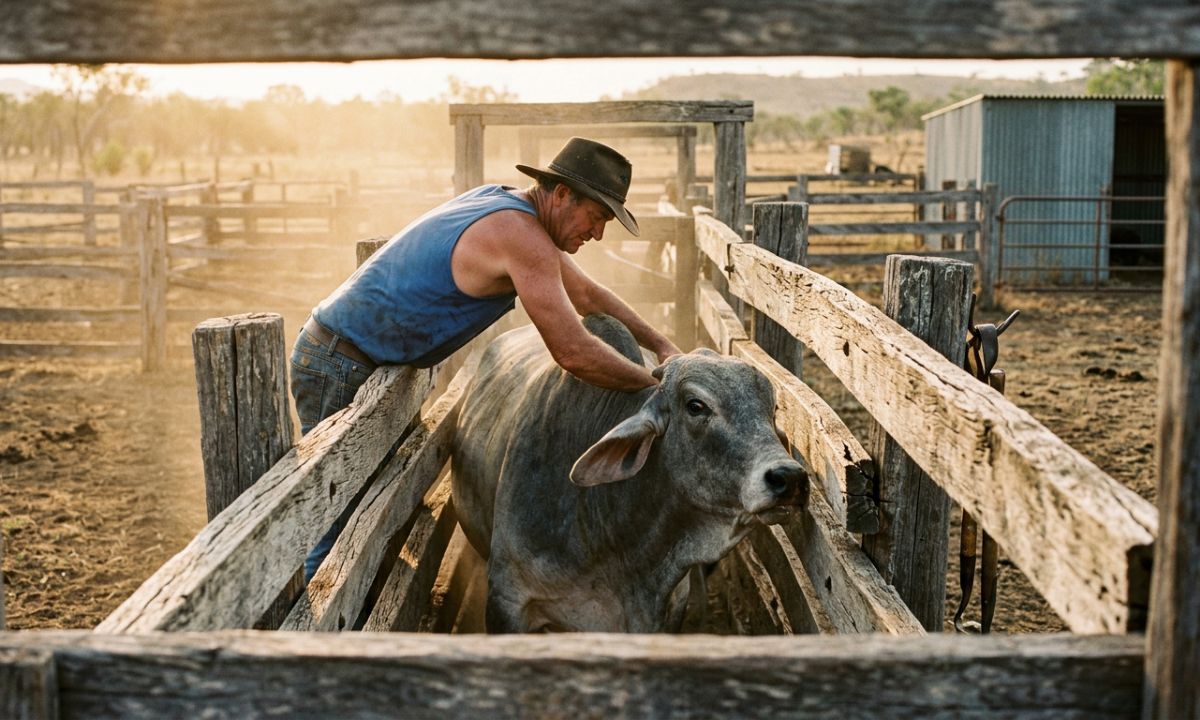
The psychological load of isolation compounds the physical risk, and although modern technology like personal locator beacons and GPS tracking can help, adoption remains inconsistent because of poor mobile coverage, cost and cultural resistance to being "monitored."
Minor injuries that would trigger formal incident reports on regulated worksites are simply patched up and forgotten about on farms, so the same isolation that protects independence also masks the true scale of the problem.
What Actually Changes Behaviour
Statistics don't save lives, changing old behaviour does.
Farms that have reduced injury rates are likely to have quite a few things in common: ROPS fitted and utilised; helmets and seatbelts treated as compulsory; briefings before high‑risk work and clear rules around rest and fatigue.
The Australian Government's $2.5 million commitment to Farmsafe Australia shows that policymakers have recognised this problem needs attention, but funding alone won't see a shift in ingrained attitudes.
Peer influence works: when respected local operators wear helmets and follow the rules, others do too. When successful farms talk openly about near‑misses, others pay attention. Insurers can also have a positive effect, as premium discounts for documented safety improvements can tilt the cost/benefit equation where margins are thin.
From Silence to Action
Queensland's farms saw another deadly year, not because farmers are careless, but because the systems meant to protect them are incomplete, under‑resourced and culturally misaligned.
Seventy‑two Australians died on farms in 2024. These are the worst national figures in more than 20 years, but they saw minimal media coverage and limited policy response.
Agriculture remains Australia's of the most dangerous industry by fatality rate, but receives a fraction of the safety investment that mining, construction and road safety get.
The silence serves no one.
Change requires shared responsibility. Farmers must recognise that experience doesn't make them invincible; regulators need frameworks that support practical improvement alongside enforcement, and insurers need to start rewarding demonstrated risk reduction.
Industry bodies must normalise honest conversations about fear, fatigue and near‑misses, and the rest of us must care enough about where our food comes from to insist that the people producing it get the same safety we demand for every other workplace.
The 2024 statistics should have sparked a national conversation, but they didn't. If this is to be anything other than another deadly year on Queensland farms, that conversation has to start before the next preventable death is added to the count.